

Literature Plug 3D isometric Free icon download
Download all to grab every PNG variant.
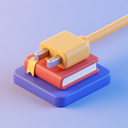
In the evolving landscape of digital design, icons have transformed from simple symbols into rich visual narratives that convey complex ideas with elegance and precision. One such innovative concept emerges in the form of a 3D isometric literature plug icon—a harmonious blend of three distinct yet interwoven elements: Literature, Plug, and the visual sophistication of a 3D isometric style. This icon stands as a testament to how modern design can merge intellectual depth with technological functionality, creating a symbol that resonates across both creative and digital domains.
The cornerstone of this icon's visual identity is its 3D isometric projection. Unlike flat 2D illustrations, an isometric view employs a specific set of angles—typically 30 degrees—to render three-dimensional objects on a two-dimensional plane. This technique gives the icon an immersive quality, simulating depth and spatial relationships that engage the viewer’s perception. Every edge, shadow, and contour appears meticulously calculated to create realism while maintaining clarity and scalability.
The use of isometric design enhances visual storytelling by allowing multiple facets of the icon to be seen simultaneously. This multi-angle visibility ensures that no detail is lost when viewed on a small screen or at a reduced size. The icon's 3D nature gives it a tactile, almost physical presence—like a digital artifact one could almost reach out and touch. This depth is not merely decorative; it serves to symbolize the layered complexity of ideas and connections represented by the concept of literature and digital interactivity.
At the heart of this icon lies a stylized book, representing Literature. However, it is not an ordinary book. Through the lens of 3D isometric design, the book appears suspended in space with subtle shadows and highlights that emphasize its volume and materiality. The cover is intricately detailed—perhaps featuring embossed text resembling classic literary titles or symbolic motifs like a quill pen or open door, representing discovery and narrative journey.
The pages of the book are subtly rendered to suggest openness—some pages slightly lifted as if in motion, evoking the idea of reading, learning, and intellectual exploration. The spine is well-defined and textured, possibly with a gradient or metallic finish to imply value and timelessness. In this representation, literature transcends mere words on paper; it becomes a living entity—a gateway to knowledge, imagination, and human expression.
More intriguingly, the book is not static. It seems connected to other elements in the composition through lines of light or subtle data streams—hinting at how literature has evolved from physical texts into digital content that can be shared and accessed globally. This dynamic quality bridges past traditions with modern innovation, a perfect metaphor for how literature continues to thrive in the digital age.
The second crucial component is the plug. Positioned strategically at one edge of the icon—perhaps embedded into the book’s spine or emerging from its side—the plug functions as a visual metaphor for connectivity. In digital culture, a plug symbolizes connection, power transfer, and access to resources. Here, it represents how literature is no longer isolated but integrated into global networks of knowledge.
Rendered in 3D isometric style, the plug features accurate proportions: three prongs (or pins), a grounded base (if applicable), and subtle reflections that give it a glossy, modern aesthetic. It appears not just as an attachment point but as an active agent—something that can be plugged into systems, devices, or platforms. This suggests that literature is now part of digital ecosystems: e-books on tablets, audiobooks streamed via apps, academic papers stored in cloud databases.
What makes this integration compelling is the juxtaposition: a traditional symbol of wisdom and creativity (the book) linked to a modern symbol of technology (the plug). This union implies that literature is both preserved and empowered through digital infrastructure. The plug doesn’t dominate the icon—it complements it, illustrating how technology enhances access to stories, ideas, and scholarship without diminishing their essence.
The true genius of this icon lies in its seamless synthesis of Literature, Plug, and 3D isometric design. These elements are not layered haphazardly but thoughtfully interwoven. The isometric format allows the book and plug to coexist in the same spatial plane without visual conflict. Shadows fall realistically across both objects, creating a sense of shared environment—like they belong together in a digital library or knowledge hub.
Color palette choices further enhance this unity: warm earth tones (for literature) contrast with cool blues or silvers (for technology), yet the transitions between hues are smooth and balanced. Light sources are consistent across both components, reinforcing the illusion of a single 3D space. This attention to detail ensures that the icon is not only visually striking but also conceptually coherent.
This icon finds relevance in a variety of contexts: educational apps, digital libraries, e-learning platforms, research portals, and even creative software designed for writers and authors. It could serve as a logo for an initiative that digitizes classic texts or promotes the integration of storytelling in technology. In user interface design, its 3D nature ensures it stands out on screens while remaining scalable across devices.
Ultimately, the 3D isometric literature plug icon transcends its visual form. It embodies a modern philosophy: that knowledge—especially the wisdom found in literature—is not static but dynamic and interconnected. Just as a plug delivers energy to power a device, literature powers minds through ideas that flow through digital networks. In this elegant fusion of form and meaning, the icon becomes more than a symbol—it becomes an invitation to explore, connect, and create.
Create your own icon with our GoGPT AI prompt:
GoGPT