

Literature Robot Flat pastel Free icon download
Download all to grab every PNG variant.
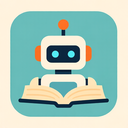
The icon in question is a meticulously crafted visual representation that masterfully unites three seemingly disparate concepts—Literature, Robot, and Flat Pastel—into a single harmonious design. At first glance, it appears as a whimsical yet thoughtful illustration, but upon closer inspection, every element serves both symbolic and aesthetic purposes. This flat pastel icon is not merely decorative; it embodies the evolving relationship between human creativity and technological advancement, particularly in how stories are written, shared, and experienced in the digital age.
The central theme of Literature is embodied through a stylized open book positioned at the icon’s core. The book is slightly ajar, suggesting that stories are still being written, discovered, or read—a dynamic and ongoing process. Its cover features soft pastel hues: pale lavender on the left, baby blue on the right, transitioning into a gentle mint green in the middle. This gradient creates a sense of fluidity and continuity—just like narratives themselves. The pages within are not blank; instead, they glow faintly with delicate lines resembling text in an elegant script font (possibly reminiscent of handwriting or classic serif typography), though no actual words are legible. This intentional abstraction implies that literature is not just about the content but also about the feeling of reading—the wonder, the imagination, and emotional resonance.
From the book’s spine, a single strand of text—a soft golden thread—drapes downward like an ink ribbon. It symbolizes how stories flow from one mind to another, connecting readers across time and space. This subtle detail reinforces the timeless nature of literature while also hinting at its digital transformation: in this modern era, narratives no longer exist solely on paper but are transmitted through screens, databases, and algorithms.
Emerging gracefully from behind the book is a robot, rendered with the clean geometry typical of flat design. Its body is composed of smooth, symmetrical shapes—circular head, rectangular torso, and tapered limbs—all outlined in soft charcoal gray but filled with gentle pastel tones. The robot’s head features a large circular eye resembling an iris that glows faintly in a warm peach hue, giving it an almost thoughtful expression. This eye isn’t just decorative; it symbolizes artificial intelligence’s growing role in content creation and literary analysis.
The robot is not aggressive or mechanical in appearance. Instead, its form is rounded and approachable—no sharp angles or harsh edges—emphasizing that technology can be a gentle partner to human imagination rather than a replacement. One of its arms extends forward, holding a stylus-like pen made of translucent pastel pink glass. The pen hovers just above the book’s open page, as if it’s about to write something new—symbolizing the collaborative nature between human authors and AI tools in modern writing processes.
Its other hand rests gently on the book's cover, a gesture suggesting reverence and curiosity. This interaction underscores a deeper narrative: that robots do not replace literature but rather assist in its expansion, offering new ways to analyze themes, generate ideas, or even co-author stories. The robot’s presence is not intrusive; it is integrated into the literary world like an editor or muse.
The flat pastel style defines every aspect of this icon’s visual language. There are no gradients, shadows, or textures—only smooth fills and crisp outlines. This minimalist approach allows the colors to take center stage, evoking a sense of calmness, innocence, and creativity. The palette consists of muted yet inviting tones: powder blue for serenity, blush pink for warmth and emotion, pale mint for freshness and clarity, soft lavender for introspection, and delicate coral for inspiration.
These colors are applied with precision: the book’s spine is a gradient of baby blue to lavender; the robot’s torso is a wash of light sage green; its limbs are in pale peach. Even the background is subtly tinted with a very faint pastel sky hue, like dawn breaking over a quiet library. This softness invites viewers to approach the icon with curiosity rather than intimidation—perfect for an image that bridges complex themes like artificial intelligence and human expression.
Importantly, the flat style enhances accessibility. The icon remains clear and legible at small sizes—a necessity for digital interfaces—while still carrying emotional weight. The pastel tones do not overwhelm; instead, they create a gentle visual rhythm that guides the eye through the composition: from the book (literature), to the robot’s gaze (technology), to its hand reaching toward creation (collaboration).
This icon is more than a representation—it is a metaphor. It captures how Literature, with all its emotional depth and historical significance, continues to evolve in the age of digital transformation. The Robot, far from being an antagonist, becomes an ally—a tool of creation rather than replacement—its presence soft and thoughtful, mirroring the gentle nature of storytelling itself. And through the flat pastel aesthetic, every line and color is carefully chosen to inspire calm reflection, creativity, and hope.
In a world where technology often feels cold or impersonal, this icon reminds us that innovation can be warm, artistic, and deeply human. It celebrates not just what literature is—but what it might become when imagination meets intelligence in a palette of soft dreams.
Create your own icon with our GoGPT AI prompt:
GoGPT