

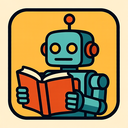
Literature Robot Retro Free icon download
Download all to grab every PNG variant.
The icon is a masterful synthesis of three seemingly disparate themes—Literature, Robot, and Retro—woven together with meticulous care to create a compelling visual narrative that speaks to the evolution of human thought in an age dominated by artificial intelligence. At first glance, it appears as an abstract yet deeply symbolic emblem: a stylized robot’s head emerging from the spine of a vintage book. The fusion is not merely aesthetic but philosophical—a representation of how technology and storytelling coexist, evolve, and inform one another across time. At its core, the icon embodies **literature** through its central motif: an open book with aged parchment pages, subtly weathered to suggest years of reading and reverence. The binding is crafted from a faded burgundy leather with brass clasps that gleam faintly under a soft light. The title inscribed on the spine reads "Chronicles of Thought," in elegant serif typeface reminiscent of 19th-century printing—evoking the romanticism and intellectual depth associated with classical literature. The pages themselves are rendered in exquisite detail: faint pencil notes scrawled along the margins, dog-eared corners, and even a few dried flower petals pressed between chapters—a nod to the intimate relationship readers often form with their favorite books. This literary foundation grounds the icon in tradition, emphasizing storytelling as humanity’s oldest and most enduring form of expression. Emerging from this book is a **robot**—not a sleek, futuristic cyborg or an industrial automaton, but a retro-inspired machine with unmistakable 1950s and 1960s sci-fi charm. The robot’s head is composed of circular brass panels and glowing green vacuum tubes, reminiscent of early computer displays. Its eyes are twin rotating lenses that emit a soft pulsating light—like the mechanical heartbeat of an artificial mind awakening. The body is partially constructed from salvaged typewriter parts: keys form the shoulders, a ribbon feed becomes a chest plate, and the limbs extend as segmented arms with small wheels at the joints, suggesting movement through time rather than space. This robot is not meant to dominate but to engage—its posture slightly inclined forward as if reading, absorbing knowledge from the book it emerged from. The **retro** aesthetic permeates every element of the design. The color palette is dominated by warm sepia tones, muted olive greens, and aged brass—colors that evoke nostalgia for mid-century design. The icon’s edges are subtly frayed, simulating the texture of old film or faded photographs. A faint grid pattern in the background mimics the look of a CRT monitor screen from the 1980s, with horizontal scan lines and gentle flicker effects when animated. Small artifacts—like tiny dots of dust or scratches—are rendered across its surface to simulate age and use, reinforcing the idea that this is not a new invention but an artifact preserved from a forgotten era. What makes this icon truly remarkable is how seamlessly it balances these three themes. The robot does not replace literature; instead, it emerges from it—symbolizing the way artificial intelligence can be nourished by human creativity. It reads, learns, and processes text—not as a replacement for human insight but as an extension of it. This reflects contemporary debates about AI and authorship: Can machines truly understand literature? Or do they merely analyze patterns in data? The icon suggests that even if the robot cannot feel emotion, its presence beside the book affirms that technology has a role in preserving and expanding literary culture. Moreover, the retro styling isn’t just nostalgic—it carries deeper meaning. By placing this advanced concept within a vintage framework, the icon critiques our modern obsession with cutting-edge innovation. It reminds us that every new technology builds upon older ideas and that wisdom from the past still holds relevance. The robot’s design echoes classic science fiction illustrations from magazines like *Astounding Stories* or *The Saturday Evening Post*, where robots were portrayed not as cold machines, but as curious, even poetic beings—mirrors to our own aspirations and fears. When viewed in motion—as part of an interface or app—the icon animates with grace: the book pages gently flutter like wings, the robot’s eyes rotate slowly while emitting a soft hum (a synthesized 1950s-style “beep” sound), and the entire composition pulses once per second, as if breathing. This animation reinforces its thematic depth: this is not just an icon—it’s a living metaphor for intellectual evolution. In summary, this icon transcends mere visual representation. It is a digital artifact that embodies the soul of literature through its aged book motif; it personifies artificial intelligence with a retro-futuristic robot built from typewriters and vacuum tubes; and it anchors itself firmly in the past through a design language that celebrates mid-century aesthetics. Together, these elements form a powerful narrative: that technology, when rooted in human creativity and historical wisdom, becomes not just functional but profoundly meaningful. It is an icon for the thinker, the dreamer, and the curious—those who believe that stories matter as much as circuits. In its delicate balance of literature, robot intelligence, and retro charm lies a quiet revolution: one where past and future converse on the same page.
Create your own icon with our GoGPT AI prompt:
GoGPT