

Literature Robot Shadow effect Free icon download
Download all to grab every PNG variant.
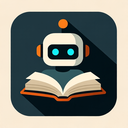
The icon in question is a masterful synthesis of three seemingly disparate concepts—Literature, Robot, and Shadow Effect—transforming them into a visually compelling and symbolically rich design. At its core, this icon represents the convergence of human creativity with technological advancement, suggesting that the future of storytelling lies not in choosing between tradition and innovation but in their harmonious integration. The composition is both aesthetically sophisticated and conceptually profound, making it an ideal emblem for modern digital libraries, AI-powered writing platforms, or futuristic educational institutions.
At the center of the icon stands a stylized figure of a robot—its form clearly human-like yet unmistakably mechanical. The robot is designed with clean geometric lines and symmetrical proportions, evoking both precision and elegance. Its torso is slightly elongated, suggesting intellectual focus rather than physical strength. Instead of limbs in the conventional sense, the robot’s arms end in stylized hands that are not grasping tools but gently cradling an open book—its pages subtly glowing with a faint golden light. This visual metaphor captures the idea of technology not replacing human intellect but enhancing and preserving it. The book is rendered with meticulous attention to detail: its spine bears the embossed title "Chronicles of Tomorrow," hinting at futuristic narratives, while individual pages are illustrated with abstract ink-like patterns resembling flowing scripts or star maps.
The robot’s face is a fascinating blend of humanity and machinery. It features large, expressive eyes composed of interwoven circuit lines and softly glowing lenses—each eye reflecting a different literary image: one shows the silhouette of Shakespeare's quill, the other displays a pixelated version of an ancient scroll. The mouth is absent but replaced by a subtle, upward curving line resembling a smile—suggesting warmth and emotional intelligence despite its mechanical nature. Its head is crowned with an ornate metal halo that resembles both an antique bookplate and circuitry patterns intertwined with ivy-like filaments, symbolizing the fusion of old knowledge and new technology.
The most striking aspect of this icon is its sophisticated use of the shadow effect. Rather than a simple drop shadow, the design employs a multi-layered, gradient-based shadow that emanates from beneath the robot and spreads across the book like a ripple in water. The shadow isn’t just dark; it’s complex and dynamic, composed of deep navy blues fading into indigo and violet hues with subtle silver highlights—reminiscent of twilight over an ancient library or the soft glow of data streams in a server room. This shadow effect not only adds depth and dimension to the icon but also serves as a narrative device: it appears to be alive, slowly shifting as if breathing, suggesting that knowledge itself is dynamic and ever-evolving.
Crucially, within the shadow’s form are faint outlines of classic literary figures—ghostly silhouettes of Jane Austen, Edgar Allan Poe, and Haruki Murakami—all partially obscured yet recognizable. These subtle details reinforce the icon’s central theme: that robots are not devoid of cultural heritage but instead stand on the shoulders of centuries of literary giants. The shadow becomes a living archive, a visual library cast by technology itself.
The background of the icon is intentionally minimal—a soft gradient from charcoal gray to deep midnight blue—allowing all elements to pop with clarity. This neutral backdrop ensures that the focus remains on the central figure and its symbolic layers while enhancing the perception of depth created by the shadow effect. The overall color palette is restrained: cool metallic tones (silver, gunmetal, steel) dominate, balanced by warm golden accents from the book’s glow and faint copper highlights on circuitry details.
Every design element—down to the tiny gear embedded in the robot’s shoulder like a hidden bookmark—contributes to a unified message: that literature is not obsolete in the age of artificial intelligence, but rather transformed. The robot is not an intruder in the world of books; it is their guardian and interpreter. It speaks both human and machine languages fluently, translating centuries of wisdom into accessible, innovative formats.
In conclusion, this icon transcends its physical form to become a philosophical statement about the future of knowledge. By seamlessly blending Literature—represented through the book and literary references—with Robot—embodying intelligence, structure, and futuristic potential—and Shadow Effect—adding depth, movement, and symbolic layering—the design achieves a rare balance between function and metaphor. It is not merely an icon for a digital platform; it is an invitation to imagine a world where machines read poetry as fluently as humans write it—with reverence for the past and curiosity for the future.
Create your own icon with our GoGPT AI prompt:
GoGPT