

Literature Smartphone Steampunk Free icon download
Download all to grab every PNG variant.
```html
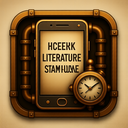
At the heart of this intricately designed icon lies a mesmerizing synthesis of three seemingly disparate worlds: literature, modern technology in the form of a smartphone, and the richly imagined aesthetic of steampunk. The result is not merely an image but an immersive artifact—a portal into a fictional era where Victorian-era craftsmanship harmonizes with futuristic digital innovation, all anchored in the timeless reverence for storytelling.
The central object is a smartphone, reimagined through the lens of 19th-century industrial design. It is no longer a sleek slab of glass and metal but rather an elaborate mechanical marvel crafted from polished brass, aged copper, and dark walnut wood. The device’s frame resembles the intricate gears and clockwork mechanisms found in antique pocket watches or steam-powered engines. Rivets glint under simulated candlelight, each one meticulously placed with the precision of a watchmaker's hand. Delicate cogs spiral outward from the corners like floral filigree, suggesting not mere decoration but functional complexity.
At its core is a circular display screen—replacing the modern flat panel—with an elegant glass lens that bears the appearance of aged, slightly warped porthole glass. Instead of a digital interface, this screen flickers with softly glowing symbols and text in an ornate, serif font reminiscent of 1800s typewriters. The display shows flowing passages from classic literary works—fragments of Shakespearean sonnets, excerpts from *Pride and Prejudice*, or the opening lines of *Moby Dick*—written in a script that seems to drift across the surface like ink on water, occasionally shimmering with subtle golden highlights.
Attached to the back of this steampunk smartphone is a complex network of brass tubing and leather straps. These tubes are not for conveying steam—they are conduits for data, depicted in artistic renderings as pulsating waves of electric blue light that snake through translucent crystal vials filled with swirling, ether-like fluid. The fluid glows softly, shifting colors between amber and cobalt depending on the information being processed—representing both digital signals and the emotional resonance of literature.
From the top edge of the device emerges a small, rotating brass scroll holder—a direct homage to ancient manuscripts and parchment rolls. This scroll slowly unrolls as though in motion, displaying a poem or short story written in delicate copperplate script. It is not static; the text appears to evolve as if being composed in real time by an invisible hand, symbolizing the continuous flow of literary creation.
On either side of the smartphone are elegant steam vents—curiously ornate, resembling miniature chandeliers made from wrought iron and crystal. Instead of emitting visible steam, they release delicate wisps of shimmering gold dust that float upward like embers from a dying fire. This dust forms fleeting silhouettes: tiny figures reading under lamplight, authors writing by candle glow, or characters from famous novels stepping out of the pages.
At the base of the icon, resting on a wooden pedestal etched with intricate literary motifs—shelves overflowing with leather-bound books, quills dipping into inkwells—the smartphone is powered by a small, hand-cranked generator. The crank handle is shaped like an open book cover, and turning it generates electricity not through modern circuits but via the mechanical rotation of tiny gears that power a miniature steam turbine inside the device’s core.
Every element in this icon serves to underscore its central theme: literature as the foundation of human thought, technology as its evolving vessel, and steampunk aesthetics as its poetic embodiment. The smartphone is not a symbol of detachment or digital overload; instead, it represents an idealized future where knowledge and narrative remain sacred. It is a device that doesn't just deliver content—it preserves it in an artisanal form, where every click or tap mimics the turning of a page.
Surrounding the icon in symbolic fashion are faint outlines of classic literary works—*Don Quixote*, *Frankenstein*, *Les Misérables*, and *The Odyssey*—carved into the air like spectral pages floating around it. They do not interfere with the device but rather seem to coexist within its energy field, suggesting that stories themselves fuel innovation.
Ultimately, this icon is more than a visual representation—it is a manifesto. It declares that literature does not belong solely in dusty archives or digital libraries; it thrives in the very tools we use to navigate our lives. The smartphone of tomorrow might look like it was forged by clockwork artisans and fed by the dreams of great authors, and this icon captures that vision with breathtaking detail and emotional resonance.
In a world increasingly dominated by fleeting digital content, this icon stands as a reminder: stories matter. And when they are preserved not just in words but in design, in machinery, in steam and gear—then literature becomes not just read, but lived.
```Create your own icon with our GoGPT AI prompt:
GoGPT