

Music Car Retro – Free icon download
Download all to grab every PNG variant.
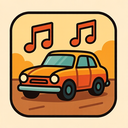
The "Music, Car, and Retro" icon is a vibrant, nostalgic fusion of three powerful cultural elements—music, automotive heritage, and retro aesthetics—that come together to create a visually rich and emotionally resonant symbol. This icon is not merely a collection of images or abstract forms; it is an immersive experience designed to evoke memories of bygone eras when music and cars were inseparable from the soul of youth culture. Each element—Music, Car, and Retro—is meticulously integrated into the design, ensuring that no aspect is sacrificed for aesthetic balance or symbolic coherence.
At its core, the icon features a vintage-style retro car silhouette rendered in bold lines and warm metallic tones such as rust red, chrome silver, and faded teal. The car is stylized to resemble classic American muscle cars from the 1960s and 1970s—think of a customized Chevrolet Camaro or a Mustang with flowing curves and a wide grille. This design choice grounds the icon in automotive history, representing not just transportation but a symbol of freedom, rebellion, and journey. The car's body is slightly tilted as if mid-drive, suggesting motion and energy—capturing the sense of speed and adventure that defined those eras.
Embedded within or beneath the car’s hood is a stylized music note that morphs into a guitar string running along the side of the vehicle. The music note isn't just an add-on; it's an integral part of the icon’s structure. It glows with soft pastel hues—think faded orange, mint green, and lavender—creating a dynamic interplay between sound and movement. This fusion signifies that music was not only enjoyed in car stereos but was also a vital part of the driving experience. Think about those long road trips where classic rock or soulful jazz played through vinyl records or early cassette players—the sound became part of the journey itself.
The "Retro" aspect is manifested through a range of visual and design elements. The overall style employs sharp, geometric lines reminiscent of mid-century design, with subtle gradients and textures that mimic old film stock or analog photography. There are hand-drawn details such as faded logos on the car’s side—like a classic AM radio station logo or a vintage record label—adding authenticity to the retro feel. The icon may also include tiny details like a cigarette holder in the dashboard, an analog speedometer with needle flickers, and even faint traces of dust on the windshield, all of which enhance its sense of time travel.
The music component is not limited to just a single note. Instead, it manifests as a layered auditory experience embedded within the visual. When viewed in motion or on digital platforms with interactive features (such as mobile apps or websites), the icon may subtly pulse with rhythm—its colors shifting in time to beats from classic rock songs like “Smells Like Teen Spirit,” “Born to Run,” or “Sweet Caroline.” This creates a dynamic, responsive design that turns the static image into a living, breathing piece of culture.
The connection between music and cars in this icon is deeply symbolic. In the 1960s and 1970s, youth culture was defined by rebellion, freedom, and personal expression—values that were mirrored both in music and in the car industry. Young people would modify their vehicles to reflect their identities, just as they curated playlists of songs that expressed who they were. The icon captures this duality: a car is not just a machine but an extension of personality; music is not just sound but emotion and identity. Together, they form a powerful cultural narrative about self-discovery and adventure.
Moreover, the retro aesthetic serves as both homage and commentary on modern life. As today’s digital culture often prioritizes speed and convenience, this icon reminds users of a time when experiences were slower, more deliberate—and deeply connected to sensory joy. Driving with music blasting through an analog radio was not just entertainment; it was ritual. The icon celebrates that ritual by preserving its warmth, imperfection, and emotional depth.
From a design standpoint, the icon is scalable and adaptable—ideal for use across digital platforms such as social media profiles, mobile applications, or website headers. Its high contrast between bold car outlines and soft music elements ensures visibility even on small screens. It can also be customized with different color palettes to represent specific retro subcultures—such as 70s disco cars with funk rhythms or 80s synthwave vehicles with electronic beats.
Additionally, the icon carries emotional weight. For those who grew up during the golden age of analog music and classic automobiles, it serves as a nostalgic trigger—a visual key to memories of family road trips, summer concerts in rural towns, or first car purchases with a dreamy playlist. It speaks to generations who remember when a radio station could bring entire communities together through shared music and shared drives.
In sum, the "Music, Car, and Retro" icon is more than a visual design—it is a cultural artifact in its own right. It blends the energy of movement (car), the emotion of sound (music), and the authenticity of nostalgia (retro) into one compelling symbol. Whether used as a branding element for music streaming apps focused on classic genres, automotive lifestyle platforms, or retro-themed events, this icon serves as a bridge between past and present—a tribute to an era when music and machines were inseparable parts of personal identity and freedom.
By integrating all three keywords—Music, Car, and Retro—into a cohesive narrative, the icon transcends simple representation. It becomes an invitation: to drive down memory lanes, to listen with intention, and to rediscover the joy of analog experiences in a world increasingly dominated by digital speed.
Create your own icon with our GoGPT AI prompt:
GoGPT