

Nature Bus Tribal – Free icon download
Download all to grab every PNG variant.
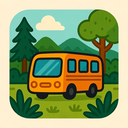
The "Nature, Bus, and Tribal" icon is a powerful and intricate visual representation that seamlessly fuses three distinct yet harmonious elements: the raw beauty of Nature, the modern functionality of a Bus, and the rich cultural depth of Tribal art. This icon transcends mere graphic design—it stands as a symbolic bridge between ancient traditions and contemporary life, inviting viewers to reflect on movement, connection, and belonging.
At its core, the icon draws inspiration from Nature. The foundation of this design is rooted in natural elements such as flowing rivers, rustling trees, vibrant flora, and the undulating shapes of mountains or earth formations. These natural motifs are not merely background decorations but serve as structural components—the lines and curves of a tree trunk may form the frame of the bus body; leaves might spiral into the wheel design; streams could flow along the undercarriage like veins in a living organism. The color palette reflects this nature theme, using earth tones—olive greens, deep browns, terracotta reds, and soft blues—enhancing a sense of organic balance and environmental harmony.
Integrating the concept of a Bus into this icon elevates it from being purely symbolic to one of movement and community. The bus is not rendered in a conventional, mechanical way. Instead, its form is stylized and transformed through tribal aesthetics—its windows are replaced by geometric patterns resembling ancestral tattoos; its doors are shaped like natural forms such as lotus blossoms or animal antlers; and the roof curves gently like a hillside or a wave in the ocean. The bus symbolizes connectivity—linking remote villages to urban centers, transporting people across landscapes, and fostering cultural exchange. In this interpretation, the bus is not just a vehicle but a living extension of human journey through nature.
The Tribal element is what breathes life and soul into the entire composition. This aspect draws from indigenous art traditions found globally—such as those of the San people in Southern Africa, the Aboriginal dot paintings of Australia, or the intricate patterns of West African tribal textiles. The icon uses repeating geometric shapes, zigzags, spirals, and abstract lines that echo traditional tribal motifs. These patterns are not random; they are intentionally placed to form a narrative—perhaps one that traces the path of a journey from forest to village via mountain passes or desert routes. Tribal symbols like the sun emblem (representing life and journey), the serpent (symbolizing wisdom and transformation), or animal figures such as birds, elephants, or deer appear subtly throughout the design.
Each part of the icon is interwoven with meaning. For instance, a stylized bird may fly from one end of the bus to another—representing freedom and migration—while tribal dots along the side panels suggest generations passing through time. The wheels are formed not just as circular shapes but as concentric circles with inward-facing patterns resembling tribal rings or ancestral family trees. This fusion implies that every journey is part of a larger cultural and natural continuum.
The balance between the organic and the structured is central to this icon’s appeal. Nature provides fluidity—its curves, textures, and rhythms create an intuitive visual language that feels alive and breathing. The Bus introduces order, purpose, and direction—a vehicle designed for transport but reimagined as a vessel of cultural continuity. Tribal art brings identity, heritage, and storytelling—making the entire composition more than a simple image; it becomes a living narrative.
Moreover, this icon serves as both a metaphor and an environmental statement. It suggests that modern transportation—represented by the bus—does not have to disrupt nature but can move within it respectfully. The design encourages sustainable travel, emphasizing that progress need not come at the cost of ecological balance. The tribal patterns remind us of ancestral wisdom about living in harmony with natural cycles—the seasons, the land, and community. In this way, the icon becomes a symbol for eco-conscious mobility and cultural preservation.
It is also culturally inclusive. By blending nature, transport, and tribal elements from diverse global traditions without appropriation or misrepresentation, the icon celebrates diversity and fosters mutual respect. It invites viewers from different backgrounds to see shared values—movement as connection, travel as transformation, and community as a foundation for growth.
The use of symbolism is deliberate. The intersection of the bus with nature and tribal motifs creates a visual language that speaks to both the physical and spiritual dimensions of human experience. For instance, when the wheels touch the ground beneath a tree root or when a tribal pattern extends from one side of the vehicle to another like roots spreading into soil, it becomes clear that these elements are not separate but interdependent—like nature, culture, and transportation co-evolving over time.
This icon could serve various purposes: as a logo for eco-friendly public transport initiatives in tribal communities, as a symbol of sustainable development programs in rural areas, or even as an art piece displayed in cultural centers to promote dialogue about identity and environment. Its versatility lies in its ability to be interpreted across generations and geographies.
In essence, the "Nature, Bus, and Tribal" icon is more than a design—it is a living philosophy. It reminds us that modern life can coexist with natural beauty and ancient wisdom. It illustrates how transportation can be an act of cultural continuity rather than disruption. And it shows that in a world increasingly defined by speed and technology, there remains deep value in slowing down, listening to nature, honoring tradition, and remembering where we come from.
Through its thoughtful integration of Nature’s vitality, the Bus’s function as a connector of communities, and the depth of Tribal expression—this icon becomes not just visually compelling but profoundly meaningful. It stands as a beacon for sustainable design, cultural respect, and environmental consciousness in an age where such values are more needed than ever.
Create your own icon with our GoGPT AI prompt:
GoGPT