

Nature Factory Filled – Free icon download
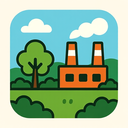
Download all to grab every PNG variant.
The "Nature, Factory, and Filled" icon is a thoughtfully designed visual symbol that masterfully merges three distinct yet interrelated themes: the raw beauty of nature, the industrial structure of modern manufacturing, and a strong sense of fullness or completeness represented by its filled appearance. This icon does not merely represent one concept—it embodies a dynamic conversation between organic ecosystems and human technological advancement, highlighting both harmony and tension in our relationship with the environment.
At its core, the icon features a stylized representation of nature. It begins with a central spiral or wave form that mimics natural patterns found in rivers, tree roots, or ocean currents. This spiral is not random; it follows organic geometry—fluid lines and gentle curves that evoke the rhythms of living systems. Within this natural base lies an embedded structure—a series of interconnected nodes and geometric shapes—that visually represent a factory environment. These elements are not harsh or mechanical but are subtly integrated into the natural form, suggesting that industrial processes can coexist with ecological balance when designed thoughtfully.
The "Nature" aspect is more than just aesthetics. It symbolizes sustainability, resilience, and regeneration—qualities essential in addressing environmental degradation. The flowing lines of the icon suggest continuous movement and renewal, like seasons turning or ecosystems evolving over time. This natural foundation establishes a moral and philosophical context: human development must not come at the expense of planetary health but should instead be guided by principles of stewardship and respect for biodiversity.
On the other hand, the "Factory" component introduces structure, precision, and efficiency. Within the natural spiral, clusters of geometric shapes—rectangles, hexagons, or circular units—appear as if they are part of a manufacturing complex. These forms represent production lines, assembly stations, or processing facilities. However, rather than appearing cold and sterile as typical factory icons do in traditional design, these industrial elements are rendered with warmth and integration. For instance, the edges of the factory shapes gently merge into the flowing natural curves, creating a seamless transition between nature and industry.
This integration reflects a modern vision of industrial development—one that acknowledges its environmental impact but seeks to mitigate it through sustainable practices. The factory is not seen as an enemy to nature but as a potential partner in ecological restoration. For example, the icon could symbolize green factories powered by renewable energy, waste recycling systems, or facilities that use biodegradable materials. It suggests that technology and industry need not be destructive; they can be designed with environmental ethics at their core.
The "Filled" aspect of the icon is both visual and symbolic. Every line, curve, and shape within the design is completely filled—there are no open outlines or empty spaces. This fullness conveys completeness, stability, and confidence. It implies that this vision of a harmonious relationship between nature and industry is not theoretical or idealistic—it is achievable through intentional planning, innovation, and commitment. The filled state gives the icon a sense of presence and authenticity; it feels solid and grounded.
Visually, the filled style enhances the depth of the design. The use of color in this icon may vary depending on context—perhaps starting with earth tones like greens, browns, and blues to represent nature, transitioning into metallic silver or gray for factory elements—but even in these variations, the fullness ensures that every part of the image is visually saturated and impactful. This saturation makes the icon highly legible and memorable, especially in digital interfaces where clarity is crucial.
From a symbolic standpoint, the filled nature of this icon suggests a closed loop system—a model where waste from industrial processes is recycled back into natural cycles. It reflects circular economy principles, where resources are reused rather than discarded. The filled factory units might represent systems that transform by-products into valuable outputs such as biofuels or organic compost, feeding back into the natural environment.
Furthermore, this icon can serve as a powerful tool in educational and corporate branding contexts. For instance, an environmental technology company might use this icon to communicate its mission of aligning industrial progress with ecological responsibility. A government agency focused on sustainable development could adopt it to represent policies that promote green manufacturing and conservation.
Psychologically, the combination of nature and factory evokes a sense of balance—something both modern and timeless. The filled quality provides reassurance, suggesting that solutions exist and are within reach. It conveys hope: that despite past environmental damage, a future where industry thrives without destroying nature is possible.
In conclusion, the "Nature, Factory, and Filled" icon is far more than a simple visual motif. It stands as a symbol of transformation—a bridge between ancient natural systems and modern industrial capabilities. By blending the organic fluidity of nature with the structured functionality of a factory, while being fully rendered in an expressive filled style, this icon communicates profound ideas about sustainability, innovation, and responsibility. It challenges outdated perceptions that industry must conflict with nature and instead proposes a future where both can coexist in harmony. This icon is not just static—it is dynamic, forward-thinking, and deeply relevant to the challenges of our time.
Ultimately, it serves as a visual manifesto: nature is not an obstacle to progress; it is its foundation. And when industrial systems are designed with respect for natural laws and full integration into ecological processes, they become tools for regeneration rather than destruction.
Create your own icon with our GoGPT AI prompt:
GoGPT