

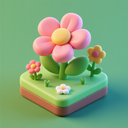
Nature Flower 3D isometric – Free icon download
Download all to grab every PNG variant.
In the ever-evolving landscape of digital design, icons serve as essential visual cues that bridge human intuition with technological interfaces. Among the many styles available, one that stands out for its depth, realism, and aesthetic appeal is the 3D isometric icon. This style combines geometric precision with spatial depth to create a visually engaging representation of objects or concepts. When applied to nature-themed imagery—particularly a flower—the 3D isometric format transforms simple botanical representations into dynamic, immersive designs that captivate the viewer’s attention. This specific icon, titled "Nature Flower in 3D Isometric," is a harmonious fusion of organic beauty and modern digital artistry, carefully constructed to convey both natural elegance and technological sophistication.
The foundation of this icon lies in its adherence to the principles of Nature. Rather than simplifying the flower into a flat, two-dimensional sketch, the design draws inspiration from real-world flora. It captures elements such as petal structure, symmetry, leaf arrangement, and color gradients that reflect actual botanical characteristics. The petals are rendered with realistic curves and subtle textures—some slightly raised to suggest surface detail like dew droplets or soft highlights—while the stem is gently curved to mimic natural growth patterns. This attention to biological accuracy ensures that the icon feels authentic and grounded in reality, even though it exists in a stylized digital form.
At the heart of the icon is a vibrant Flower. The chosen bloom features a layered structure with multiple petal rings arranged in a radial symmetry typical of many real flowers such as roses, daisies, or tulips. Each petal is designed with depth and variation—some facing forward to create an illusion of perspective, others slightly angled to suggest movement or growth. The color palette is thoughtfully selected: soft pinks blend into warm yellows and gentle whites to evoke a sense of sunlight filtering through a garden canopy. This gradient not only adds visual richness but also symbolizes the natural cycle of day and bloom, connecting the icon to the rhythm of nature. In some versions, tiny buds or pollen particles are subtly rendered in mid-air to suggest motion and life within the scene.
What truly elevates this design from a mere illustration is its execution in 3D isometric style. Unlike traditional flat icons that lie on a single plane, this icon uses an isometric projection—a method of representing three-dimensional space on a two-dimensional surface using equal angles and consistent scaling across all axes (typically 120 degrees between edges). This technique gives the flower a strong sense of depth and volume. The viewer can perceive not only the front-facing view but also glimpses of the sides—revealing the stem’s thickness, the base of petals, and even internal structure such as vascular patterns in subtle gray tones.
Within this 3D isometric framework, every element has a defined depth layer. For instance, the flower center (the nectar pad or bloom core) appears slightly elevated from the background plane, creating visual hierarchy. The stem extends downward at a 45-degree angle from the base of the flower, connecting it to an imaginary ground plane that mimics soil or earth. This grounding element reinforces the connection to Nature—it reminds viewers that this flower is not floating in a void but rooted in a real ecosystem. The use of light and shadow adds further realism: soft highlights on the outer petals suggest illumination from above, while subtle shadows under the lower edges create contrast and dimension.
The 3D isometric approach also allows for greater creative flexibility. Designers can experiment with angles—rotating the view slightly to show a top-down or side profile—without losing structural integrity. This makes the icon scalable across different devices and platforms, from smartphone home screens to desktop applications. Whether viewed on a small tablet screen or large digital dashboard, the depth and clarity of the isometric style maintain visual impact.
From an artistic standpoint, this icon embodies a balance between technical precision and organic beauty. The geometric rigor of isometric design provides mathematical consistency, while the floral elements bring warmth and life. This duality makes it ideal for use in applications related to environmental science, gardening apps, wellness platforms, or even educational tools focused on botany. It can serve as both an aesthetic enhancement and a functional symbol—representing growth, renewal, and harmony with nature.
Moreover, the 3D isometric style aligns well with contemporary design trends that favor depth over flatness. As users increasingly interact with digital interfaces through touchscreens or augmented reality, they are drawn to icons that feel tangible and immersive. A 3D isometric flower icon satisfies this demand by offering a sense of realism and physicality—something flat designs often lack. It also stands out in crowded UIs due to its unique three-dimensional form, making it easier for users to identify and interact with.
The integration of Nature, Flower, and 3D isometric is not accidental but intentional. Each element informs and supports the others. The natural theme provides emotional resonance—associations with peace, growth, beauty, and balance. The flower serves as a focal point of that emotion, while the 3D isometric style acts as both a technical medium and an artistic vehicle to express that emotion in a modern way. Together, they form a powerful visual narrative that transcends simple representation.
In conclusion, the "Nature Flower in 3D Isometric" icon is more than just a digital image—it is a thoughtful design statement. It celebrates the harmony between natural elements and advanced visualization techniques. By combining biological accuracy with spatial depth, it creates an engaging, memorable symbol that honors both the beauty of nature and the innovation of modern design. Whether used as a logo, interface element, or decorative feature, this icon stands as a testament to how digital art can reflect and enhance our connection to the natural world.
Create your own icon with our GoGPT AI prompt:
GoGPT