

Nature Flower Origami – Free icon download
Download all to grab every PNG variant.
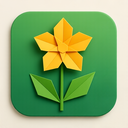
At the heart of this evocative icon lies a profound fusion of three elemental forces: Nature, Flower, and Origami. This intricate visual representation does not merely depict these elements in isolation; instead, it weaves them together into a single, harmonious narrative that speaks to balance, growth, transformation, and the quiet beauty found in simplicity. The icon captures not only the aesthetic appeal of each component but also their deeper philosophical meanings—how nature inspires creation, how flowers embody life and renewal, and how origami reflects both precision and spiritual intention.
The visual foundation of this icon is drawn from the natural world. At its core is a delicate, fully blossomed Flower, rendered with soft gradients that mimic sunlight filtering through forest canopies. The petals are layered, not just in form but in texture—some gently curled like morning dew, others subtly overlapping to create depth and motion. This floral structure is not static; it appears to breathe, as if caught mid-expansion or in a moment of quiet bloom. The color palette ranges from pale blush to golden amber and deep violet, symbolizing the spectrum of nature's diversity—seasonal shifts, soil richness, and the interplay of light and shadow.
The flower is not simply a static subject; it is an extension of Nature itself. Every petal represents a different ecosystem—some reflecting wetlands with reflective surfaces, others evoking mountain meadows under clear skies. The stem emerges from the center, not just as a physical support but as a symbolic conduit connecting the earth to the sky. Roots are implied beneath it—subtle lines extending downward like veins of life—signifying that this flower is grounded in natural cycles: growth, decay, regeneration. Nature is not passive here; it is dynamic and alive, pulsing with energy and rhythm.
Now, where this icon becomes uniquely profound is in the integration of Origami. The petals are not only natural forms—they have been folded into intricate origami shapes. Each petal has been transformed through the art of paper folding: some are crisp, triangular flaps reminiscent of crane wings; others fold into gentle waves that echo ocean tides or wind patterns. These folds are not random—they follow precise geometric principles, honoring the traditional Japanese discipline that values balance, symmetry, and mindfulness in craft. The origami elements appear seamlessly woven into the floral structure as if nature itself has been gently folded by hands trained in quiet contemplation.
The transformation from natural flower to origami-inspired form is not a loss of essence but a metamorphosis—a symbol of how the natural world can be observed, studied, and expressed through human artistry. Origami, traditionally associated with precision and patience, becomes here an instrument of connection between the organic and the constructed. Just as flowers grow from seeds through time and weather, origami begins with a single sheet—often square—and unfolds into complex patterns over careful folding. This parallel suggests that both nature and origami are processes of transformation: they begin in simplicity, grow through stages, and culminate in something greater than their original form.
Moreover, the icon reflects a deeper cultural dialogue between Eastern philosophy and environmental stewardship. In Japanese culture, origami is often associated with peace, respect for life, and the impermanence of existence—core tenets of Zen thought. The flower embodies growth and beauty in a world that is always changing. When these two concepts converge, the icon becomes more than an artistic image—it becomes a meditation on sustainability. It suggests that just as a paper crane can be folded from one sheet to represent hope, so too can a single flower represent resilience, renewal, and the enduring spirit of life amidst change.
The interplay of color in this icon further reinforces its thematic depth. The warm hues suggest sunlight and vitality—essential to nature's flourishing. Yet within those tones are subtle cool gradients that echo the quiet stillness of origami folds—where silence speaks louder than sound. This contrast symbolizes balance, a key principle in both natural ecosystems and human design. The icon subtly reminds viewers that beauty is not only found in vibrant growth but also in the calm precision of folded paper, which maintains harmony even when it appears rigid.
Additionally, this icon invites interaction—both physical and spiritual. Observers might imagine gently folding a piece of paper to mimic the petal’s form, or placing a real flower beside an origami creation to witness how both can coexist in harmony. It is designed not just as a static image but as a living metaphor: nature teaches us to grow freely, while origami teaches us to fold with intention and care. Together, they represent a way of life where humans learn from the earth and respond with creativity and respect.
In sum, this icon transcends mere visual representation. It is a celebration of interconnectedness—an artistic embodiment of how Nature nurtures life, how Flower symbolizes beauty in growth, and how Origami embodies human skill and mindfulness. It stands as a timeless reminder that creation—whether from soil or paper—is rooted in balance, patience, and reverence for the world around us. This is not just an icon; it is a living philosophy captured in form, color, and movement.
Create your own icon with our GoGPT AI prompt:
GoGPT