

Nature Leaf Digital glitch – Free icon download
Download all to grab every PNG variant.
Description of the Icon: Nature, Leaf, and Digital Glitch
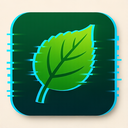
This icon represents a powerful fusion of organic vitality and technological imperfection—a visual embodiment of nature’s resilience meeting the chaotic beauty of digital disruption. At its core lies a stylized leaf, carefully rendered with rich green tones that evoke deep forest canopies, sunlight filtering through tree branches, and the delicate patterns found in real-world botanical forms. The leaf is not merely a static symbol; it is animated by subtle digital distortions that give it a dynamic, almost living quality. This blend of natural form and digital glitch creates a unique aesthetic that bridges the physical world with the virtual realm.
The Nature aspect of this icon is deeply rooted in authenticity and harmony. The leaf itself is inspired by real flora—its veins are subtly detailed, showing branching patterns reminiscent of vascular systems in actual plants. The color palette features earthy greens, soft browns, and hints of golden light that suggest a dappled sunlight effect often seen in natural environments. This connection to nature is not superficial; it reflects the icon's philosophical grounding in ecological balance, sustainability, and the quiet strength found in organic systems. The leaf grows from a central point as if emerging from soil or water—a visual metaphor for growth, renewal, and the cyclical rhythms of life.
However, what truly distinguishes this icon is its integration of Digital glitch. The natural leaf is not rendered in pristine perfection. Instead, it exhibits intentional distortions—flickering pixels along the edges, color banding where shadows meet light, and subtle data corruption that mimics digital noise. For example, certain parts of the leaf may show a slight pixelation or a burst of random static when viewed up close, as if the image were captured from a low-bandwidth network or an unstable screen. These glitches are not flaws; they are intentional design choices that reflect our modern reality—where technology is constantly interacting with and sometimes distorting the natural world.
This digital interference does not undermine the leaf’s natural form; rather, it enhances its narrative depth. The glitch acts as a visual metaphor for environmental challenges—such as climate change, data pollution, or ecosystem collapse—that distort the integrity of nature in our age of rapid technological advancement. As artificial systems encroach on natural habitats and extract resources at unsustainable rates, the digital glitch becomes a symbolic representation of how human innovation can both preserve and damage ecological balance.
Moreover, the glitch effect introduces a sense of motion and unpredictability. The leaf appears to "breathe," with subtle pulses of light or color shifts that resemble neural activity or data transmission. At times, small fragments of text—like "ERROR 404: Leaf Not Found" or "LOADING... BIODATA" —appear briefly on the edges of the icon, disappearing almost instantly. These textual glitches add another layer to the icon's meaning, suggesting a dialogue between human systems and natural intelligence. The presence of such messages implies that technology is attempting to interpret or digitize nature, but often fails due to incomplete data or system errors.
The combination of Leaf and Digital glitch results in a compelling visual paradox: a serene, life-giving element (the leaf) subjected to technological decay. This tension creates emotional resonance. On one hand, viewers may feel empathy for the leaf—its fragile form threatened by digital corruption. On the other hand, they may see irony in nature being both preserved and distorted through human-made systems. This duality reflects contemporary global dilemmas: our desire to understand and protect nature through technology versus the unintended consequences of that very pursuit.
The icon’s composition is carefully balanced between realism and abstraction. The leaf retains recognizable botanical features—its shape, symmetry, and directional flow—but is deconstructed in places to emphasize digital imperfections. For instance, a section of the leaf may appear as fragmented pixels or merge with a background noise pattern that simulates electromagnetic interference. These effects are not random; they follow compositional rules that mimic how data loss occurs in digital environments—such as buffer overflows, signal degradation, or algorithmic misinterpretations.
From a design standpoint, this icon serves multiple purposes. It can function as a visual brand symbol for eco-tech startups that aim to merge sustainability with innovation. It can also be used in environmental campaigns to highlight how digital systems often fail to accurately represent natural processes. In educational contexts, the icon could be used to teach about the intersection of biology and computing, or as a tool for illustrating data visualization challenges when representing complex organic systems.
Philosophically, this icon challenges viewers to reconsider their relationship with both nature and technology. Is it possible to preserve the integrity of natural forms while using digital tools? Can we design systems that do not degrade or distort the very things they seek to measure? The leaf in this icon suggests a cautious answer: yes—only if we acknowledge our limitations, respect ecological processes, and allow room for error, unpredictability, and imperfection.
In essence, the icon is more than just a visual image—it is a concept. A quiet protest against technological overreach. A celebration of nature’s endurance despite digital chaos. A reminder that even in a world dominated by data and code, beauty still arises from simplicity, growth, and balance—especially when that beauty is preserved in spite of the glitches.
Therefore, this icon stands as a testament to harmony—not through perfection or control—but through vulnerability. It honors the leaf as both a natural entity and a symbol of digital fragility. In its fusion of Nature, Leaf, and Digital glitch, it becomes not just an aesthetic choice, but a meaningful commentary on our shared future.
Create your own icon with our GoGPT AI prompt:
GoGPT