

Nature Robot Pixel art – Free icon download
Download all to grab every PNG variant.
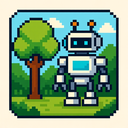
Description of the Icon: "Nature, Robot, and Pixel Art"
This meticulously crafted icon masterfully fuses three distinct yet harmonious elements—Nature, Robot, and Pixel art—into a visually striking and conceptually rich composition that transcends genre boundaries. The resulting image is not merely a collage of these themes; it is an intentional narrative experience where each component plays a vital role in creating a unique aesthetic identity. From the very first pixel to the final edge of the shape, this icon embodies balance, synergy, and innovation—offering both visual appeal and deeper symbolic meaning.
At its core lies Nature, which is not just represented through abstract or vague depictions but is deeply integrated into every structural and thematic layer of the design. The robot's form is not cold or mechanical in the traditional sense; instead, it is shaped like a living, breathing organism grown from organic matter. Its body emerges from a crystalline forest of pixelated leaves, each leaf composed of sharp-edged green pixels that ripple slightly as if in motion. These leaves are not static—they appear to pulse and breathe with subtle animation cues embedded in the pixel patterns, suggesting life and growth. The robot’s limbs extend like branches of a tree, with roots spiraling deep into the soil-like base of the icon, which is rendered using earthy pixel tones—browns, moss greens, and soft grays—mimicking natural terrain. The interplay between structure and environment gives the impression that this robot is not invading nature but rather evolving within it.
The Robot element in this icon is both futuristic and grounded in relatable function. Rather than a sterile, sci-fi machine with metallic surfaces or glowing circuits, the robot appears as a harmonious blend of form and function. Its chassis is composed of modular pixel blocks—square tiles arranged in geometric patterns reminiscent of early computer graphics—that suggest adaptability and intelligence. The robot’s head features a circular lens made from translucent pixel layers, capturing sunlight in the form of tiny light rays that scatter through the grid like photons breaking through a forest canopy. Instead of sharp edges or angularity typical of industrial robots, the design uses soft curves and organic transitions between pixels to create a feeling of fluidity and calm. The robot's eyes are represented by two pixel clusters with blinking patterns—each blinking in rhythm with the heartbeat-like pulse of the leaves above—adding emotional depth and suggesting sentience.
What truly defines this icon is its Pixel art foundation. Every line, curve, and color transition is drawn using a retro-futuristic pixel grid system—typically 8x8 or 16x16 pixel blocks—that evokes the nostalgic charm of early video games and digital graphics from the 1980s and 1990s. The entire composition is built on a consistent color palette derived from nature-inspired tones: emerald green, rust orange, deep blue shadows, soft white highlights, and earthy terracotta. Each pixel is clearly defined with sharp edges, giving the image a high level of detail despite its minimalist aesthetic. The pixel art style isn’t just decorative; it serves as a narrative tool—highlighting the contrast between artificial intelligence and natural systems through visual language that both speaks to modern technology and resonates with timeless themes of growth, balance, and symbiosis.
The design also incorporates subtle animations or motion cues implied through pixel variation. For instance, wind may be suggested by slight shifts in the leaf patterns—some pixels shifting position while others remain stable—creating a sense of dynamic movement even in a static image. The robot’s body gently sways as if responding to environmental forces, and its circuits are rendered with flickering pixel effects that resemble natural electrical signals within living organisms. This interplay between stillness and motion brings the icon to life in the viewer's mind, transforming it from a simple symbol into an immersive experience.
Symbolically, this icon represents a powerful message about coexistence between technology and nature. In our increasingly digital world, humans are constantly striving to innovate—but often at the expense of ecological balance. This pixel art robot embodies a vision of harmony: technology is not separate from nature but is instead nurtured by it and grows alongside it. The robot’s form becomes a metaphor for artificial intelligence that learns from natural patterns—like how trees grow in response to sunlight or how ecosystems evolve over time. It suggests that innovation need not come at the cost of environmental destruction, but can instead emerge through careful integration with natural laws.
From a design standpoint, the icon is highly accessible across various platforms—from mobile apps and websites to digital signage—because of its high contrast, clear shapes, and strong visual hierarchy. The use of pixel art ensures it remains legible even at small sizes, while still retaining its intricate details. This makes it ideal for branding projects that seek to convey both technological advancement and environmental responsibility.
Ultimately, this icon stands as a visionary fusion of Nature, Robot, and Pixel art. It does not simply merge these elements—it transforms them into a cohesive, meaningful whole. By grounding the robot in natural growth patterns and expressing it through the nostalgic yet precise language of pixel art, the design creates a bridge between past and future, humanity and technology, life and machine. It is not just an image; it is a statement—a reminder that progress can be beautiful, sustainable, and deeply connected to the world around us.
In today’s world where digitalization often feels alienating from nature, this icon offers a refreshing alternative. It challenges viewers to reconsider how technology can coexist with ecological values—proving that even in a pixelated universe, beauty and balance are possible.
Create your own icon with our GoGPT AI prompt:
GoGPT