

Nature Train Iconic – Free icon download
Download all to grab every PNG variant.
In the vast tapestry of human innovation, few symbols encapsulate both progress and harmony with nature as powerfully as the fusion of Nature, Train, and Iconic. This iconic icon transcends mere representation—it becomes a living metaphor for sustainable movement, ecological balance, and enduring legacy. It is not merely a visual motif; it is a story in motion—an embodiment of how human advancement can coexist with the natural world without compromising its essence.
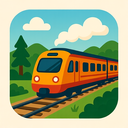
At the heart of this icon lies an elegant interplay between raw wilderness and structured technology. The central image features a train gracefully winding through a mountainous landscape, its silver rails threading through dense forests, meandering rivers, and towering pine trees that stretch into the horizon. The train is not a mechanical object in isolation—it appears as if it has grown from the earth itself, emerging from the roots of ancient trees and rising along natural contours of hills and valleys. This seamless integration reflects a deep respect for nature's patterns: the rhythm of rivers, the flow of wind through foliage, and the undulating shape of mountain ranges are mirrored in the train’s path.
The design is unmistakably Iconic. It captures attention not only through its aesthetic appeal but also because it resonates emotionally with audiences across cultures. Whether viewed on a digital map, a travel brochure, or displayed in a public art installation, the icon evokes feelings of wonder and nostalgia. It speaks to generations that remember childhood trips through rural countryside and the thrill of catching a glimpse of distant mountains as the train pulls into view. Its iconic status lies in its ability to merge familiarity with imagination—something that has been celebrated in global visual culture since the dawn of rail travel.
But this is not a mere romanticized vision. The icon is deeply rooted in Nature. Every element reflects ecological consciousness: the forest canopy acts as a protective layer, filtering sunlight and maintaining humidity along the train's route; birds soar overhead in synchronized patterns, suggesting harmony between wildlife and human transit. The river beside the track is not just background—it pulses with life, its water clear and cool, reflecting sky and foliage. Even the soil beneath the tracks appears richly textured, teeming with microorganisms that contribute to a balanced ecosystem. This depiction challenges outdated assumptions that industrial progress must come at nature’s expense. Instead, it suggests a future where infrastructure is designed to serve nature rather than dominate it.
The Train in this icon is more than transportation—it is a symbol of connection. It links distant communities, carries cultural traditions, and enables the exchange of ideas and goods without causing environmental degradation. The train's locomotive features an eco-friendly design: solar panels embedded along its roof harness sunlight, while wind turbines on its side generate clean energy. Its wheels are made from recycled materials, and the carriage interiors are crafted with sustainable wood and biodegradable textiles. This modern iteration of rail travel reflects a paradigm shift—one where innovation is not only efficient but also environmentally responsible.
Moreover, the icon embodies resilience. Over centuries, trains have weathered storms, seasons, and changes in society. Yet here, the train appears unshaken by time—its path remains steady even as forests grow thicker and rivers shift course. This stability speaks to a deeper truth: nature is dynamic but predictable; human systems can adapt to these rhythms if built with wisdom and foresight. The train does not conquer the landscape—it listens to it, responds to it, and moves in harmony.
The icon's Iconic quality extends beyond visual appeal. It serves as a cultural touchstone—a shared symbol of unity between rural traditions and urban modernity. In remote villages, elders point to the train as a sign of progress without losing connection to ancestral ways. In cities, it is referenced in art, literature, and music as a symbol of escape and discovery. Its presence on postcards, billboards, and educational materials reinforces its role in shaping collective identity.
What sets this icon apart from others is its balance. It does not idealize nature or glorify technology—instead, it shows how they can coexist in mutual respect. The train travels through forests where animals pause to observe it, not fearing it. Birds nest along the overhanging branches, and deer cross the tracks with calm confidence. This level of integration implies that environmental protection is not a constraint but a foundation for innovation.
Furthermore, this icon inspires action. It encourages viewers to think about sustainable transportation choices, urban planning that respects natural boundaries, and policies that prioritize long-term ecological health over short-term economic gains. Schools use it in lessons on climate change and environmental science, while travelers are motivated to choose rail over air or car travel due to its lower carbon footprint.
In conclusion, this icon is more than a design—it is a promise. A promise that progress can be both efficient and sustainable. A promise that technology can serve nature rather than exploit it. In every line of the train’s path, in every leaf rustling beside its rails, and in the stillness of mountains watching over it all, we see a vision of what humanity could become: thoughtful, connected, and deeply respectful of the natural world. It is Nature at peace with Train, and together they form an Iconic symbol of a future worth striving for.
This icon stands not just as a visual artifact, but as a beacon—a reminder that the most enduring human achievements are those that align with the rhythms of life on Earth.
Create your own icon with our GoGPT AI prompt:
GoGPT