

Politics Globe Organic pattern Free icon download
Download all to grab every PNG variant.
```html
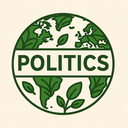
The icon in question is a masterful fusion of symbolic depth and visual complexity, representing the profound interconnection between global politics and natural systems through an intricate organic pattern. At its core lies a stylized globe—its surface not rendered with conventional political cartography but reimagined as a living, breathing entity shaped by fluid organic forms. The globe is subtly curved, suggesting both geographical continuity and the spherical nature of our planet's ecosystem. It serves as the central focal point, drawing attention to the global stage where political decisions are made and consequences ripple across borders.
What makes this icon truly unique is how it transcends traditional representations of geopolitics. Instead of sharp lines or rigid boundaries, the globe’s surface is seamlessly integrated with an organic pattern—reminiscent of flowing water, leaf veins, neural pathways, or coral reef structures. These patterns are not superimposed; they are intrinsic to the form itself. The continents and oceans emerge from a continuous web of curves and spirals that mimic natural growth processes, suggesting that political systems do not exist in isolation but are deeply embedded within Earth’s living systems.
The organic pattern is rendered with meticulous attention to detail, using flowing, biomorphic lines that evoke both biological structures and the subtle rhythms of nature. These lines branch out like root networks beneath the surface or radiate outward like sunlight through a forest canopy. The patterns appear in varying densities—thicker in areas representing densely populated or politically active regions (such as North America, Europe, and East Asia), while thinner, more delicate filaments stretch across sparsely inhabited continents, symbolizing emerging political movements or potential future engagement.
Color plays a vital role in conveying the icon’s layered meaning. A base palette of deep earth tones—rich greens reminiscent of forests and mosses—dominates the organic pattern, representing sustainability, growth, and ecological balance. These colors transition subtly into blues that echo ocean currents and atmospheric layers, symbolizing interconnectedness across environments. Warm golds and soft ambers thread through the network like veins carrying life-sustaining energy—a visual metaphor for governance as a system meant to nourish rather than exploit.
Politics is not depicted through overt symbols like gavels, flags, or voting booths. Instead, its presence is implied in the very structure of the icon. The way the organic patterns converge and diverge across different regions suggests power dynamics—where some areas are more interconnected (indicating strong political institutions), while others remain isolated but capable of growth. Nodes within the network can be interpreted as key decision-making centers: international summits, diplomatic hubs, or grassroots movements—each contributing to a larger political ecology.
The icon also carries a subtle message about environmental politics. By merging the globe with an organic pattern, it challenges viewers to reconsider how political decisions impact natural systems. Climate policy, resource management, and international cooperation are no longer abstract concepts but integral parts of the same living whole. The flowing lines suggest that sustainability is not a separate agenda but should be woven into the fabric of governance itself.
From a design perspective, the icon balances complexity with clarity. Despite its intricate details, it remains instantly recognizable as both a globe and a symbol of interconnectedness. The organic pattern adds texture without overwhelming the central form. Its fluidity suggests adaptability—political systems must evolve like natural ecosystems to remain resilient in the face of change.
Overall, this icon transcends mere visual representation; it is a conceptual statement about global politics as an extension of Earth’s natural order. It calls for leaders and citizens alike to think not in terms of borders and power struggles alone, but as stewards within a larger living system. The fusion of the globe with organic patterns transforms political discourse into a narrative of harmony, interdependence, and shared responsibility—a vision where governance grows naturally from the rhythms of our planet.
In an era defined by climate crises, digital globalization, and shifting power structures, this icon stands as a timely reminder: true political progress is not measured by dominance but by sustainability—by how well our institutions mirror the resilience and balance found in nature. The globe is not just a map; it is a living organism. And politics? It must become its heartbeat.
```Create your own icon with our GoGPT AI prompt:
GoGPT