

Politics Globe Origami Free icon download
Download all to grab every PNG variant.
```html
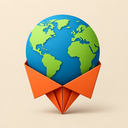
At the heart of this meticulously crafted icon lies a profound synthesis of three powerful symbolic elements—Politics, Globe, and Origami. This design transcends mere visual representation; it embodies a philosophical statement about global governance, international diplomacy, and the delicate balance between power and peace. The icon is not just an image—it is a narrative in form, where each line, fold, and contour speaks to humanity’s enduring quest for unity amidst diversity.
The foundation of the icon is an intricate representation of a Globe. Crafted with meticulous attention to detail, the globe appears as a three-dimensional sphere rendered in stylized flat-plane geometry. The surface of this miniature earth is divided into continents and oceans using subtle gradients that suggest depth and realism while maintaining an artistic minimalism. However, what sets this globe apart from conventional depictions is not its accuracy but its transformation—this planet has been folded.
From the very core of the globe emerges a striking Origami aesthetic. The continents themselves are not drawn in their natural form but are instead conceptualized as carefully folded paper shapes, reminiscent of traditional Japanese origami. The Americas unfold like a crane’s wings, Europe is shaped like an elegant hat or fan, Africa takes on the form of a geometric pyramid, and Asia stretches into a long, serpentine ribbon that spirals around the sphere. These folds are not random; each crease represents negotiation, compromise, and structured cooperation—core tenets of Politics.
Each fold is etched with precision, suggesting both fragility and resilience. The paper-like texture of the globe’s surface adds a layer of metaphor: nations, like origami models, are delicate constructions requiring care to maintain their form. A single misstep—whether through aggression or neglect—can unravel decades of diplomatic effort. Yet within this vulnerability lies strength; origami is known for its ability to create complex and stable structures from a single sheet of paper. So too do nations, despite their differences, coalesce into stable global systems when guided by wisdom and mutual respect.
The icon’s central motif—a stylized globe folded in the shape of an origami crane—is particularly symbolic. The crane is a universal emblem of peace, longevity, and hope in many cultures, especially in East Asia. In this design, the bird-like form emerging from the globe suggests that diplomacy and international cooperation are not merely tools of political strategy but expressions of spiritual and ethical aspiration. This fusion of politics with symbolism elevates the icon beyond geopolitical commentary—it becomes a call to action for leaders to prioritize peace over power.
Color plays a critical role in reinforcing the icon’s message. The globe is rendered in earthy tones—soft greens for forests, deep blues for oceans, and warm browns for landmasses—evoking nature’s balance. Yet subtle gradients of gold and silver trace the folds, suggesting value and prestige. These metallic highlights are not signs of wealth but representations of shared legacy: the collective history, treaties, institutions (like the United Nations), and cultural exchanges that bind nations together.
At its base lies a small origami lotus flower—another deeply symbolic form in Eastern traditions, representing purity, enlightenment, and rebirth. This element ties back to Politics not as mere power struggles but as processes of transformation and renewal. It suggests that political systems must evolve like the lotus: rising from murky waters with grace and purpose.
The icon’s overall composition is balanced—symmetrical yet dynamic, structured yet fluid. This duality reflects the nature of global politics: rigid institutions coexisting with adaptable diplomacy. The interplay between paper folds and spherical form creates a sense of movement, as if the globe is in motion—not rotating through space, but unfolding into new possibilities.
In essence, this icon is a meditation on how nations can work together without losing their identity. It speaks to leaders who must navigate complex alliances, crises, and ideological divides with patience and creativity—qualities embodied by the art of origami. It reminds us that real political power lies not in domination but in collaboration; not in division but in the gentle yet powerful act of folding disparate pieces into a unified whole.
Ultimately, this icon is more than a visual symbol—it is a manifesto. A quiet plea to policymakers and citizens alike: let us treat our planet like an origami masterpiece—delicate, intentional, and full of hidden strength. Let politics be the art of folding peace into the fabric of global existence. And let every fold be a step toward unity.
```Create your own icon with our GoGPT AI prompt:
GoGPT