

Religion Moon Neon Free icon download
Download all to grab every PNG variant.
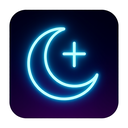
The icon, a mesmerizing fusion of Religion, Moon, and Neon, emerges as an artistic embodiment of modern spiritual expression—a luminous bridge between ancient sacred traditions and the electric pulse of contemporary urban life. At its core lies a stylized crescent moon, rendered with delicate precision in radiant neon blue, pulsating like a beacon from the night sky. This lunar form is not merely decorative; it serves as a profound metaphor for enlightenment, cycles of rebirth, and divine feminine energy—elements deeply rooted in various religious traditions across human history. From the Islamic crescent symbolizing faith and guidance to the Hindu goddess Chandra representing time and emotion, from pagan lunar rituals to Christian mysticism where moonlight often signifies grace and revelation—the moon has long served as a celestial guide for spiritual seekers. In this icon, that legacy is preserved but transformed through a contemporary lens.
The neon glow surrounding the crescent moon is not static; it flickers subtly, mimicking the rhythm of breath or heartbeat. This dynamic luminescence suggests both life and vitality—the eternal spirit within all beings. The color chosen—vivid electric blue—carries its own symbolic weight: purity, clarity, introspection, and transcendence. In many religious traditions, water (often associated with purification) reflects moonlight; here, the neon light becomes a modern interpretation of that sacred reflection—an artificial but deeply intentional source of spiritual insight. The glow spills outward in gentle waves across the icon’s surface, dissolving into dark gradients that evoke both mystery and depth. This interplay between light and shadow speaks directly to one of religion's central themes: the eternal struggle between darkness and enlightenment, ignorance and wisdom.
Embedded within the crescent moon is a subtle yet powerful religious motif—a minimalist mandala composed of geometric patterns reminiscent of Sufi tazkiyah (purification) symbols or Tibetan Buddhist thangka designs. These intricate lines, rendered in glowing cyan threads that seem to pulse with inner energy, suggest a sacred geometry hidden within the cosmos. The mandala is not overtly tied to any one faith but resonates across traditions: Christian mystics spoke of divine patterns in creation; Islamic art avoided figurative representation by focusing on infinite geometric designs as expressions of God’s perfection; indigenous cultures often saw the universe as an interconnected web of sacred symbols. In this icon, the mandala functions not just as decoration but as a meditation tool—a visual anchor for contemplation in an age saturated with digital noise.
What truly sets this icon apart is its integration of neon technology—specifically, cold cathode fluorescent lighting or modern LED arrays that emit intense yet cool light. The choice of neon is not merely aesthetic; it reflects the cultural and spiritual shift from traditional sacred spaces (temples, churches, mosques) to digital realms and urban landscapes where spirituality often flourishes in unexpected places. Neon signs have historically adorned city streets—symbols of commerce, nightlife, desire—but here they are repurposed as tools of devotion. The icon suggests that modern religion is no longer confined to stone buildings; it exists in the glow of smartphone screens, in underground spiritual gatherings beneath subway stations, and on illuminated billboards where people pause for a moment of stillness. This is religion reimagined: vibrant, accessible, and visible even in the most secular corners of existence.
Surrounding the moon are faint traces of ancient scripts—half-visible glyphs inspired by cuneiform tablets, Tibetan mantras written in Devanagari, Arabic calligraphy from Quranic verses on divine light. These are not legible to the casual observer but become apparent under certain lighting conditions or through augmented reality filters. They whisper of forgotten prayers and sacred knowledge waiting to be rediscovered. The integration of these elements signifies that while traditions may evolve, their essence remains—etched into the fabric of time and space like glowing signatures from past generations.
Moreover, the icon subtly incorporates a sense of impermanence—a core tenet in many religions, especially Buddhism and Taoism. The neon glow doesn’t last forever; it flickers with intentionality, mimicking the transient nature of existence. Like a flame in the wind or moonlight on water, its brilliance is fleeting yet unforgettable. This transience serves as a reminder: true spirituality is not about permanence but presence—the moment when one feels connected to something greater than oneself.
In essence, this icon is more than visual art—it’s an invitation. An invitation to pause beneath a neon moon and reflect on the sacred in the modern world. It challenges us to see religion not as outdated doctrine but as a living, breathing force that adapts through time and technology. The moon guides us through darkness; neon illuminates our paths; religion gives meaning to both light and shadow. Together, they form a powerful symbol: spiritual awakening under the electric glow of the night.
Create your own icon with our GoGPT AI prompt:
GoGPT