

Robotics Bus Cyberpunk Free icon download
Download all to grab every PNG variant.
```html
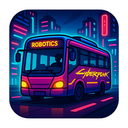
At first glance, the Cyberpunk Robotics Bus icon presents an electrifying fusion of advanced technology, urban transit, and dystopian aesthetics. This meticulously crafted digital emblem encapsulates the essence of a future where robotics have revolutionized public transportation in a sprawling megacity dominated by neon-lit skylines, data-driven economies, and corporate hegemony. Every pixel pulses with the energy of an era defined by artificial intelligence supremacy, cybernetic enhancements, and autonomous urban systems. The icon is not merely a representation—it is a narrative device that tells the story of humanity's symbiotic evolution with machines in an age where buses are no longer simple vehicles but sentient transit hubs.
At its core, the icon centers on a towering, aerodynamic bus silhouette—its form both futuristic and functional. The body of the vehicle is sleek and angular, crafted from a matte black alloy that absorbs ambient light like a void. Embedded within its surface are glowing circuit patterns in electric blue and toxic green—neural pathways that pulse rhythmically with data flow. These bioluminescent veins suggest an internal AI intelligence not just guiding the bus but feeling its way through the city streets, making real-time decisions based on traffic density, passenger load, and environmental hazards. The structure is reinforced with visible titanium struts and hydraulic joints reminiscent of exoskeletons—clear nods to robotics engineering at its most advanced.
The front of the vehicle features a panoramic windshield made not of glass but a dynamic holographic display that flickers between digital maps, transit schedules, and encrypted messages. This interface is animated with glitch effects, typical of cyberpunk visuals—text appears and disappears in fragmented bursts, resembling corrupted data streams from an underground network. Above it looms the bus’s "face": two massive optical sensors shaped like glowing red lenses set within a metallic visor frame. These aren't mere cameras—they are AI eyes capable of facial recognition, threat assessment, and even emotional state analysis of passengers through subtle bio-signals.
What makes this icon truly unique is how seamlessly the theme of robotics interweaves with the concept of public transportation. The bus is not a passive machine; it possesses autonomous locomotion, self-repair systems, and adaptive architecture. Its undercarriage houses multiple articulated robotic limbs—mechanized wheels that can transform into treads or hover jets depending on terrain conditions. These limbs are coated in reflective nano-paint that shifts color with the surrounding environment, allowing the bus to blend into shadows or flare with neon intensity during nighttime operations.
From a distance, the vehicle appears as a moving fortress of technology. But up close, intricate details reveal deeper meaning. On its sides are decals from rival tech corporations—“NexaDrive Systems” and “OmniTrans Collective”—indicating the commercialized nature of this future transit system. These logos are etched with subtle micro-LEDs that blink in Morse code patterns only visible under certain light conditions, hinting at hidden communications between autonomous fleets. The roof is crowned with a rotating drone array: smaller robotic units that detach to survey traffic congestion, deliver packages, or even provide aerial surveillance for city security AI.
Even the windows are infused with robotics intelligence—smart glass capable of switching from transparent to opaque in milliseconds. When opaque, they display augmented reality advertisements and live social feeds from passengers' neural implants. The doors open not with mechanical hinges but through a magnetic field displacement system, revealing interiors lit by pulsing ambient lighting that reacts to passenger movement—each step triggering a ripple of color across the cabin floor.
The backdrop of the icon is steeped in classic cyberpunk imagery: towering skyscrapers with cascading neon billboards, rain-slicked streets reflecting fractured light, and aerial transit lanes where drone taxis zip between buildings. The bus itself cuts through this environment like a mechanical whale—massive yet fluid, imposing yet graceful. The surrounding air is thick with digital haze: floating advertisements in Japanese and Mandarin characters swirl around the vehicle like cyber-ghosts, while flickering holograms of forgotten brands decay into static.
Perhaps most telling is the atmosphere of tension beneath the spectacle. Despite its advanced capabilities, this bus operates in a society where access to autonomous transit is stratified—only certain districts receive priority routes. The icon subtly conveys this inequality through visual cues: a faint red barcode on one side of the vehicle indicates it belongs to an elite corporate fleet, while graffiti tags from underground resistance movements scrawl across its rear quarter panel in glowing orange spray paint.
In essence, the Cyberpunk Robotics Bus icon is far more than a symbol. It is a cultural artifact—a visual manifesto of a future where transportation has evolved into an intelligent ecosystem governed by AI, shaped by corporate interests, and deeply entwined with human existence. It embodies the paradox of progress: immense technological sophistication coexisting with social fragmentation and digital surveillance. With every glowing circuit, robotic limb, and neon-streaked silhouette, this icon captures the spirit of robotics, bus, and cyberpunk in a single, electrifying frame.
```Create your own icon with our GoGPT AI prompt:
GoGPT