

Robotics Piano Pixel art Free icon download
Download all to grab every PNG variant.
```html
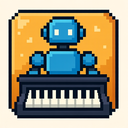
The icon in question is a masterful fusion of three distinct yet harmoniously interconnected themes: robotics, piano, and pixel art. This meticulously crafted digital symbol encapsulates the intersection of futuristic technology and classical musical elegance through the lens of retro-inspired visual design. Every element has been carefully chosen to evoke a sense of playful innovation while maintaining aesthetic coherence across all three key components.
At first glance, the icon stands out with its unmistakable pixel art style—characterized by crisp 16x16 or 32x32 pixel resolution, limited color palettes (typically ranging between 8 and 16 vibrant hues), and blocky yet expressive geometry. The use of dithering techniques adds subtle depth to surfaces, simulating gradients without compromising the retro feel. This visual language immediately transports viewers to the early days of video games, evoking nostalgia while simultaneously feeling refreshingly modern in its execution.
At the center of the icon is a stylized robotic figure—neither entirely humanoid nor fully mechanical, but rather an abstract fusion of both. The robot has a compact, boxy body reminiscent of 8-bit video game characters from classic systems like the Nintendo Entertainment System or Game Boy. Its limbs are articulated with simple geometric joints, giving it the appearance of being powered by internal servos and microcontrollers. The head features two large, glowing pixels forming eyes—pulsing softly in a binary rhythm (on/off), suggesting artificial intelligence processing data in real time.
What truly sets this icon apart is the integration of the piano. Instead of a conventional musical instrument, the robot's chest houses an intricate miniature piano keyboard made entirely from pixelated keys. Each key is rendered as a distinct block of color—white and black squares in perfect alignment, carefully spaced to resemble real piano layout (though simplified for pixel constraints). The most captivating detail is that one of the robot’s mechanical arms extends outward toward these keys, with a single digit—modeled as a rounded rectangular segment with glowing tips—hovering just above the central C key. This gesture implies imminent play or ongoing performance, adding dynamism to an otherwise static icon.
Further enhancing the musical theme, faint soundwave patterns ripple from the piano keys in small pixel bursts—represented by diagonal lines of alternating color pixels that pulse outward like sonic echoes. These waves are not overly detailed but are just visible enough to convey motion and energy, tying back into both robotics (as mechanical vibrations) and music (as acoustic output). The background elements include subtle grid patterns suggesting a digital interface or circuit board beneath the robot’s feet, reinforcing the sense of technological integration.
The color scheme is intentionally curated: deep blues and purples dominate the robot’s chassis, symbolizing advanced engineering and data processing. Accents in electric green, neon yellow, and soft magenta highlight interactive zones—such as sensor nodes on the robot's head, control panels on its arms, or the glowing piano keys themselves. These colors are carefully selected to be both vibrant enough for visibility at small sizes (ideal for use as a favicon or UI element) and harmonious with one another in pixel art conventions.
From a conceptual standpoint, this icon serves as a metaphorical bridge between two seemingly opposite worlds: the cold precision of robotics and the warm emotional resonance of piano music. It suggests that artificial intelligence is not just capable of calculation, but also creativity—of composing melodies, interpreting emotion, and engaging with art in meaningful ways. The pixel art style amplifies this idea by presenting a futuristic concept through a nostalgic visual language, reminding us that innovation often draws inspiration from the past.
Moreover, the icon functions as an emblem of interdisciplinary fusion—a symbol for developers of AI-driven music apps, educators teaching coding and creativity in classrooms, or artists exploring generative art using robotic systems. In gaming contexts, it might represent a character who is both a mechanical engineer and a composer; in software interfaces, it could denote features related to AI-generated music or robotic instruments.
In conclusion, this icon transcends its simple 32x32 pixel format to become a rich narrative artifact. By seamlessly blending robotics through its mechanical form and intelligent design, the piano via its embedded keyboard and implied performance, and pixel art through every visual choice from resolution to color palette, it encapsulates a modern digital dream: where machines learn not only to calculate but also to create beauty. It is both a tribute to vintage aesthetics and a forward-looking vision of human-machine collaboration in art and technology.
```Create your own icon with our GoGPT AI prompt:
GoGPT