

Robotics Satellite Shadow effect Free icon download
Download all to grab every PNG variant.
```html
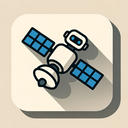
This meticulously crafted icon embodies the convergence of cutting-edge technology and futuristic vision by seamlessly integrating three distinct yet interconnected themes: Robotics, Satellite systems, and a dynamic Shadow effect. Every detail has been thoughtfully designed to convey innovation, exploration, and advanced artificial intelligence in space environments. The icon serves as a symbolic representation of humanity's evolving relationship with intelligent machines and orbital infrastructure.
The central visual element is a highly stylized satellite, but one that transcends conventional design. Instead of the typical metallic cylinders or boxy modules commonly associated with real-world satellites, this icon presents a sleek, geometrically refined spacecraft composed of smooth curves and angular precision. The body is segmented into modular components—each resembling an articulated joint or robotic limb—suggesting that this satellite is not merely a passive observer but an active participant in its environment. This fusion of satellite architecture with mechanical articulation establishes the core link to Robotics, implying that modern space platforms are no longer just inert instruments, but autonomous entities capable of self-navigation, adaptive positioning, and even on-orbit maintenance tasks.
The satellite's form is not symmetrical; rather, it features a dynamic tilt and rotation that suggest motion or activation. Its surface is adorned with subtle circuit-like patterns—glowing blue lines that pulse faintly in the design—representing data flow, communication systems, and embedded AI processors. These visual cues reinforce the idea of an intelligent machine capable of processing vast amounts of information from space-based observations and responding to real-time conditions. The satellite’s solar panels are not flat but resemble robotic wings—flexible, segmented appendages that can unfold or adjust direction autonomously based on sunlight exposure, further emphasizing its robotic capabilities.
One of the most striking features of this icon is the intricate Shadow effect. Cast diagonally beneath the satellite, a long and softly blurred shadow stretches across a stylized orbital path. The shadow is not merely black; it contains subtle gradient tones—deep indigo fading into midnight blue—creating an impression of depth and three-dimensionality. This effect enhances the illusion that the satellite is hovering above a celestial plane, possibly orbiting Earth or floating through deep space. The soft edges of the shadow suggest movement and energy dispersion, as though the satellite emits a faint gravitational or electromagnetic field that interacts with its surrounding space.
Beyond just visual appeal, this shadow effect also carries symbolic meaning. It represents the influence and reach of robotics in space—how these intelligent systems cast a “shadow” over our understanding of exploration and Earth observation. The shadow could symbolize surveillance, data collection, or even ethical considerations surrounding autonomous technology in orbit. It’s a reminder that while robotic satellites expand our capabilities, they also introduce new dimensions of responsibility and oversight.
The background elements subtly reinforce the theme: a faint starfield overlaid with micro-dots that resemble orbital debris or signal trails. In the far distance, tiny constellation-like patterns suggest both navigation aids and AI-driven data mapping systems. A single glowing waypoint—a small circular beacon—appears near the top of the frame, indicating that this satellite is part of a larger network, possibly communicating with other robotic platforms in low Earth orbit or beyond.
In terms of color palette, the icon uses a cool-toned scheme dominated by metallic grays and deep space blacks. The primary accent colors are electric blue (representing digital intelligence), pale silver (for technological elegance), and soft white highlights (to simulate light reflection on polished surfaces). These colors do not compete with one another but instead coexist harmoniously, much like the interdependence between robotics, satellite systems, and modern computing.
Designed for use in tech interfaces, science fiction media, or space exploration applications, this icon is more than a symbol—it’s a narrative. It speaks to the future where satellites are not just tools of observation but intelligent robots with autonomy and purpose. The integration of a realistic yet artistic Shadow effect grounds the design in visual logic while adding emotional weight and depth. Together, Robotics, Satellite, and the nuanced Shadow effect form a cohesive visual story: humanity’s journey toward intelligent space exploration, where machines do more than orbit—they think, adapt, and shape our understanding of the universe.
```Create your own icon with our GoGPT AI prompt:
GoGPT