

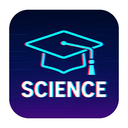
Science Graduation cap Digital glitch – Free icon download
Download all to grab every PNG variant.
At first glance, the "Science, Graduation Cap, and Digital Glitch" icon may appear to be a simple fusion of academic symbolism and technological distortion—but upon deeper exploration, it reveals a richly layered narrative that bridges the physical world of education with the digital realm of innovation. This icon is not merely decorative; it is a conceptual artifact representing the convergence of scientific inquiry, academic achievement, and the evolving nature of digital reality. It serves as both an artistic statement and a metaphorical gateway into contemporary understanding—where traditional boundaries between disciplines dissolve into dynamic, often unpredictable forms.
The central element of this icon is a graduation cap—specifically styled in a modern, futuristic form that blends classic academic symbolism with sleek, minimalist design. The cap is not rendered as it appears in traditional ceremonies; instead, it features sharp geometric edges and reflective surfaces reminiscent of high-tech materials. Instead of standing alone atop a podium or being placed on an individual’s head in a formal setting, the graduation cap floats mid-air in a suspended state, subtly glowing with an internal luminescence. This floating position suggests transcendence—an idea that aligns with both scientific exploration and academic achievement, where knowledge is no longer confined to physical classrooms but exists in open-ended fields of inquiry.
However, what makes this icon truly distinctive is the integration of a digital glitch effect. The entire structure of the graduation cap is subtly distorted—edges are slightly warped, colors bleed into adjacent areas with unnatural hues, and pixels appear to flicker or stutter in high-contrast zones. This glitch effect does not represent error; rather, it embodies a state of dynamic transformation. In the context of science, glitches are often associated with data anomalies or system breakdowns—but here they symbolize innovation emerging from imperfection. The digital distortion suggests that scientific progress is not always linear or predictable; instead, it frequently emerges from unexpected disruptions—fractures in logic, misaligned data streams, or technological failures that unintentionally lead to breakthroughs.
Moreover, the digital glitch effect interacts dynamically with the science theme. Instead of being a static overlay, the glitches pulse rhythmically—like neural signals or quantum fluctuations—and occasionally trigger brief visual phenomena such as floating equations (E = mc², Schrödinger’s equation), microscopic particle animations (electrons orbiting nuclei), or molecular structures that flicker in and out of existence. These fleeting scientific visuals emerge only when the user interacts with the icon—either by hovering over it, clicking, or even simply viewing it in different light conditions—making the icon an interactive metaphor for how scientific discovery is often triggered by curiosity and exploration rather than predetermined outcomes.
The science theme is also embedded in the color palette. Dominant hues include deep indigo, electric blue-violet, and subtle gradients of neon green and magenta—colors frequently associated with technology, data systems, and digital interfaces. However, these colors are not applied uniformly; they are selectively corrupted by glitch patterns to create a sense of instability and evolution. For instance, when the cap's peak is viewed under certain angles or lighting conditions, it appears to emit faint waveforms resembling radio transmissions or electromagnetic fields—visual cues that tie directly to physics and engineering.
From a symbolic standpoint, the fusion of the graduation cap with digital glitch represents a new form of academic identity in the 21st century. Traditionally, a graduation cap signifies completion—a moment when one leaves formal education behind. But this icon suggests that true academic achievement does not end with diplomas; rather, it evolves into continuous engagement with complex, often unstable systems—systems shaped by science and technology. The glitch becomes a representation of lifelong learning in an environment where knowledge is fluid, accessible through digital means, and subject to constant revision.
The icon also reflects the growing influence of computational thinking in scientific fields. Modern scientists—from data scientists to biologists using machine learning—often work within digital frameworks that are inherently prone to errors and distortions. The glitch effect mirrors this reality: it acknowledges that even the most advanced tools can fail, produce unexpected results, or generate noise. Yet, through such failures, new hypotheses are formed, and novel solutions emerge. This icon honors those moments of "failure" as essential stages in scientific progress.
Additionally, the icon subtly critiques traditional academic structures by introducing a sense of chaos and unpredictability. The graduation cap is not perfectly aligned or symmetrical—it tilts slightly, its brim deforms under the pressure of digital interference. This visual instability suggests that rigid systems—those built on standardized tests and linear progression—are insufficient for capturing the complexity of real-world science and innovation. Instead, this icon promotes a more adaptive model: one where learning is dynamic, where failure is part of the process, and where identity as a scientist or scholar is not fixed but continuously evolving.
Ultimately, the "Science, Graduation Cap, and Digital Glitch" icon stands as both a tribute and a warning. It celebrates academic accomplishments while simultaneously acknowledging that science—and by extension, education—is an ever-shifting landscape influenced by digital transformation. The graduation cap is not just a symbol of completion; it is a call to remain curious, resilient, and open to the unpredictable patterns of technological advancement. In this way, the icon becomes more than a visual motif—it becomes a philosophy: that true understanding emerges not from perfection or stability, but from embracing chaos, iteration, and the beautiful imperfections inherent in both scientific discovery and human growth.
Whether used in educational technology interfaces, research labs, or digital portfolios of scientists and innovators, this icon serves as a powerful reminder that the future of science lies not just in data or formulas—but in the courage to glitch, to question, and to explore beyond conventional boundaries.
Create your own icon with our GoGPT AI prompt:
GoGPT