

Software House Pixel art Free icon download
Download all to grab every PNG variant.
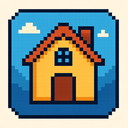
The icon under description is a masterful fusion of three distinct yet harmoniously connected elements: software functionality, the symbolic representation of a house, and the nostalgic charm of pixel art. Designed with meticulous attention to detail in 8-bit style aesthetics, this compact digital artwork encapsulates both modern technological identity and retro visual appeal. Measuring just 32x32 pixels—typical of classic console-era graphics—the icon manages to convey complex meaning through its carefully constructed composition, making it a perfect emblem for digital platforms that blend innovation with warmth.
At first glance, the central figure is a house—stylized in the form of a small, cheerful cottage rendered in blocky pixels. The structure features a triangular roof made of distinct pixel blocks: bright red tiles at the peak and orange gradients on either side to suggest sunlight or shadow. The walls are composed of pale yellow and beige squares, forming a simple rectangular base with two large windows on the front. These windows each contain two vertical blue pixels, evoking glass panes illuminated from within—a subtle suggestion of life and activity inside. A tiny black door is positioned below the central window, with a small pixelated doorknob that adds an extra touch of realism in this constrained canvas.
However, what transforms this icon from a mere architectural illustration into something far more profound is the integration of software symbolism. Embedded within the house’s roof—specifically at its peak—is a tiny, glowing circuit-like pattern formed by interconnected green and cyan pixels. This element serves as an artistic metaphor: while outwardly resembling a traditional rooftop, it subtly suggests that this is not just any ordinary dwelling—it is a digital home for software applications. The circuit motif mimics the layout of integrated microchips, with branching lines reminiscent of data pathways or neural networks, reinforcing the icon’s core theme: a place where software lives and thrives.
Further emphasizing its connection to technology, one small window on the house displays a dynamic animation loop. Within this window, a simple pixelated “running” character—a stick figure with limbs in motion—appears to be moving across the frame. This animated element is not just decorative; it symbolizes active software processes operating within the system. The character's movements are smooth for such a limited pixel grid, achieved through careful frame-by-frame animation that loops seamlessly: two frames of forward motion and one frame of rest, creating a sense of continuous activity without overloading the visual space.
Color palette plays a crucial role in reinforcing the icon’s duality. The house itself uses warm, earthy tones—beige walls, red roof—to evoke comfort and familiarity. These colors ground the image in real-world architecture and emotional warmth. Yet, within its digital framework—the circuitry on the roof, the animated figure inside, and a faint pixelated glow around the base—the palette shifts toward cool blues and electric greens. This contrast visually communicates that while the icon represents something familiar (a house), it is fundamentally built upon digital foundations (software). The interplay between warmth and technology creates an emotional resonance: this is not a cold machine but a living, breathing digital environment where software operates with purpose.
Pixel art, as a medium, enhances these themes immensely. Every pixel is intentional—no blur or anti-aliasing—because the charm lies in its deliberate limitations. The 32x32 grid challenges the artist to communicate complex ideas using only a few colored squares, forcing creativity and precision. This constraint mirrors the efficiency principles of software design: minimal code, maximum impact. In this way, the icon becomes an artistic statement about digital minimalism—the idea that powerful systems can be built with simplicity and clarity.
Functionally speaking, such an icon could represent a variety of digital products: a home automation suite, a personal app hub for managing smart devices at home, or even a software development environment themed around building "digital homes" for applications. Its appeal lies in its ability to speak across audiences—appealing to tech-savvy users who recognize the software motifs and nostalgic fans of retro gaming who appreciate the pixel art style.
In essence, this icon is more than just a visual symbol; it’s an architectural metaphor for modern digital life. It fuses the physical sanctuary of "home" with the invisible infrastructure of "software," all rendered in the timeless language of pixel art. Through deliberate design choices in shape, color, motion, and symbolism, it communicates that technology doesn’t need to feel alienating—it can be welcoming, familiar, and deeply human.
Create your own icon with our GoGPT AI prompt:
GoGPT