

Software Key Origami Free icon download
Download all to grab every PNG variant.
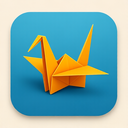
The icon described here is a masterful amalgamation of three distinct yet harmoniously integrated concepts—software, key, and origami. Each element is not merely superimposed but intricately woven into a single cohesive visual narrative that speaks to innovation, access, and artistic elegance. The design is both minimalist and deeply symbolic, making it suitable for modern digital platforms ranging from application interfaces to software dashboards.
At the heart of the icon lies an origami-inspired structure—specifically a stylized crane. This choice of shape is no accident; in Japanese tradition, origami cranes symbolize peace, hope, and transformation. When reinterpreted within a digital context, the crane becomes a metaphor for software: delicate yet resilient, folding complexity into elegant simplicity. The wings of the origami crane are crafted with crisp folds and sharp angles that suggest both precision engineering and artistic craftsmanship—qualities inherent to high-quality software development.
The crane itself appears to be constructed from digital pixels or translucent lines, subtly suggesting its synthetic nature while retaining the tactile feel of paper. The body is a sleek gradient of blue-to-indigo, evoking the coolness and reliability associated with technology. Its wings extend outward symmetrically, forming a balanced composition that draws the eye toward its central point—where the "key" element resides.
This is where the concept of key takes center stage. Positioned precisely at the chest of the origami crane is a stylized digital key. It's not an ordinary physical key but rather a hybrid artifact: part mechanical, part abstract symbol of access and authorization. The key has a modern, geometric design with clean lines and sharp edges, reminiscent of interface icons in software applications that use keys to denote login features or encryption functions.
What makes this key particularly unique is its integration with the origami structure. The shaft of the key appears to emerge from the crane’s body as if grown from it—symbolizing how access and identity are not external add-ons but fundamental components of software systems. The tip of the key is subtly illuminated with a soft glow, suggesting activation or connection—a digital "unlocking" moment when a user logs in or activates a feature.
Further enhancing the symbolic depth, one wing of the origami crane folds around the base of the key, partially covering it like protective armor. This design choice conveys security and safeguarding—essential aspects of any robust software system. The folding paper represents both protection and concealment: just as origami hides its internal structure within elegant folds, secure software systems hide their complexities behind intuitive interfaces.
The color palette is carefully chosen to reinforce the thematic elements. The base tone of the icon uses a gradient from deep navy (representing digital depth and data) to electric cyan (symbolizing innovation and connectivity). This chromatic progression mirrors the journey from raw code to user interaction—a key aspect of software development. The glowing key tip emits a soft white or pale yellow light, symbolizing clarity, insight, and access—core values in any user-centric software product.
From a technical standpoint, the icon is designed for scalability. Whether displayed at 16x16 pixels in a toolbar or as part of a splash screen at 512x512 pixels, every fold and line remains sharp and readable. The use of vector shapes ensures crisp rendering across different devices and screen resolutions—a nod to the adaptability inherent in modern software design.
Conceptually, this icon transcends its visual form. It encapsulates the philosophy behind thoughtful software: systems should be elegant like art (origami), functional like tools (key), and intelligent like digital architecture (software). The fusion of these three elements suggests a new paradigm in user interface design—one where aesthetics and utility are not at odds but coexist in perfect harmony.
Imagine this icon on a login screen. It doesn’t just represent “access”; it represents the journey into a digital world shaped by care, creativity, and precision. When users see it, they’re reminded that behind every seamless software experience lies an intricate design process—much like folding paper into a crane or crafting a key to unlock possibility.
In conclusion, this icon is more than a symbol; it’s an invitation. An invitation to explore software not just as code and algorithms, but as art and access. It speaks to the power of origami in transforming simple materials into profound forms, just as software transforms ideas into reality through coded logic. And at its core stands the key—not only a tool for entry but a metaphor for empowerment: unlocking potential through technology.
Thus, this icon stands as a poetic tribute to innovation, where three seemingly disparate concepts—software, key, and origami—come together in perfect balance to represent the future of digital interaction: beautiful, intelligent, and accessible.
Create your own icon with our GoGPT AI prompt:
GoGPT