

Sports Medical cross Asymmetrical – Free icon download
Download all to grab every PNG variant.
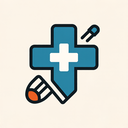
In the evolving landscape of visual communication, icons serve as powerful tools to convey complex ideas with simplicity and clarity. One particularly compelling design concept emerges from the fusion of three distinct yet interconnected elements: Sports, Medical Cross, and Asymmetrical. This unique icon transcends traditional categorization, merging the vitality and energy of athletic competition with the solemnity and care inherent in medical practice—creating a powerful visual metaphor that speaks to both physical performance and human well-being.
The central motif of this icon is an asymmetrical arrangement that deliberately breaks from conventional symmetry. While many icons rely on balanced, mirrored forms for visual harmony and recognition, this design embraces imbalance as a narrative device. The asymmetry does not appear randomly; rather, it reflects the dynamic nature of both sports and human health. In sports, movement is inherently unbalanced—players shift weight, accelerate unpredictably, and react in real time to changing environments. Similarly, in medicine, healing is never a linear or uniform process—it evolves with individual needs and circumstances. The asymmetrical layout of this icon embodies that truth: growth, recovery, and performance are fluid processes shaped by unpredictability.
At the heart of the icon is a stylized Medical Cross, traditionally associated with healthcare, humanitarian aid, and emergency response. This cross is rendered not as a static, rigid symbol—like those seen in hospitals or ambulance services—but instead as a dynamic, flowing form. The arms of the cross do not extend evenly or meet at perfect angles. Instead, one arm stretches longer and more diagonally into the composition, resembling a sprinting athlete’s stride. The other arm curves gently downward and inward, mimicking the protective embrace of medical care—offering shelter and support in times of crisis. This adaptation transforms the cross from a passive emblem into an active participant in a narrative of resilience.
The integration of Sports elements is not superficial; it is deeply embedded within the structure and movement. A faint outline of athletic motion emerges beneath or beside the cross—perhaps resembling a runner’s silhouette, or an athlete mid-leap. This silhouette is not fully formed but exists in subtle gradients and directional lines, suggesting action rather than completed form. The energy of competition and physical effort is captured through bold lines that suggest velocity, tension, and momentum. These elements do not conflict with the medical cross—they enhance it by illustrating how athletic discipline can be a pathway to improved physical health.
Moreover, the icon incorporates color gradients that reinforce its themes. The medical cross is rendered in soft blues and whites—colors associated with trust, healing, and cleanliness—while the sports components utilize vibrant reds and dynamic oranges to convey passion, energy, and intensity. This contrast highlights a duality: the care of health versus the drive for performance. The asymmetry further enhances this interplay by placing these colors in non-symmetrical positions—red on one side of the cross, blue on another—creating visual tension that mirrors emotional and physical balance.
Another notable feature is the use of negative space. In this icon, the areas between the medical cross and its athletic elements are not left empty but are instead interpreted as zones of potential. For instance, where a runner’s leg might extend beyond the cross, negative space suggests movement toward recovery or future performance. This interpretation aligns with modern medical philosophy—health is not just about treating illness but also about empowering individuals to achieve peak physical and mental conditions.
The design's asymmetry also serves as a commentary on inclusivity and diversity in both sports and healthcare. Traditional symbols often reflect homogeneous ideals, but this icon embraces imbalance as a sign of authenticity. In sports, athletes come from diverse backgrounds with varying physical capabilities—no two performances are the same. Likewise, medical care is personalized; no two patients have identical needs or recovery paths. The asymmetrical form honors this individuality and challenges the notion that health and performance must conform to a single standard.
From a psychological standpoint, this icon resonates with viewers by evoking a sense of hope and resilience. It communicates that physical activity is not just about winning or competing—it is also about self-care, recovery, and long-term wellness. The medical cross becomes not an end point but a foundation upon which athletes can build strength and endurance. At the same time, the athletic elements suggest that health should be embraced as a lifelong journey of effort, adaptation, and perseverance.
For applications in public health campaigns, fitness programs, or medical outreach initiatives, this icon offers a modern and compelling visual identity. It appeals to both athletes and patients by speaking to shared values: dedication, resilience, movement, and care. Unlike conventional icons that may feel distant or clinical, this design is approachable and emotionally resonant—feeling like a conversation between body and mind.
In conclusion, the icon that combines Sports, Medical Cross, and Asymmetrical design is far more than a mere visual artifact. It is a symbolic bridge between two worlds—performance and healing—that acknowledges their interdependence. By embracing asymmetry as an expressive principle rather than a flaw, the design reflects real-life complexity and human experience. It teaches us that balance is not always found in symmetry, but often in dynamic movement, personal growth, and the courage to face challenges with both physical strength and compassionate care.
Ultimately, this icon stands as a powerful testament to how visual language can represent multifaceted realities—offering not just information, but insight into the deeper connections between our bodies, our health, and our pursuit of excellence in life.
Create your own icon with our GoGPT AI prompt:
GoGPT