

Technology Credit card Wooden – Free icon download
Download all to grab every PNG variant.
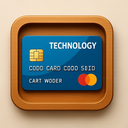
The "Technology, Credit Card, and Wooden" icon is a thoughtfully designed visual symbol that seamlessly blends three distinct yet interconnected domains: modern technology, financial transactions via credit cards, and natural materials—specifically wood. This unique fusion creates a powerful representation of innovation grounded in authenticity and sustainability. At first glance, the icon appears as a harmonious balance between the digital and organic worlds, offering both aesthetic appeal and meaningful symbolism for users across various industries such as finance, design, education, and eco-conscious entrepreneurship.
At its core, the icon features a stylized credit card embedded within a wooden frame or structure. The credit card itself is rendered with high precision—its sleek edges, rounded corners, and subtle embossed patterns reflect contemporary digital financial tools. However, instead of being placed on a blank background or metallic surface as in conventional designs, this credit card is carefully integrated into the texture of natural wood. The grain of the wood flows around the card's silhouette, suggesting that even traditional materials can carry forward modern functionality. This integration symbolizes a bridge between past and future—a fusion where timeless craftsmanship meets cutting-edge technology.
The wooden element is not merely decorative; it serves as a foundational layer of meaning. Wood, as a material, represents sustainability, resilience, and human connection to nature. In an era dominated by digitalization and synthetic materials, the inclusion of wood reminds users that technology should not come at the cost of environmental integrity. The icon thus communicates a vision where technological advancement is not antithetical to ecological responsibility but rather can coexist with and even enhance sustainable practices.
The credit card within the wooden structure symbolizes trust, accessibility, and financial inclusion. In today’s world, credit cards are essential tools for commerce, travel, online shopping, and personal finance management. By placing this familiar object in a natural context, the icon suggests that financial tools can be designed with both user convenience and environmental consciousness in mind. It implies that innovation doesn't have to mean sacrificing ethical or sustainable values—it can instead be an expression of thoughtful design.
Technology is not just represented as abstract data or circuitry. In this icon, technology is embodied through the digital functionality of the credit card itself—its ability to process payments instantly, connect with mobile devices, and securely authenticate transactions. Yet, this technological aspect is softened by its physical integration into wood. The lines of the card are slightly textured to mimic natural wood fibers, and subtle digital patterns (like QR codes or chip-like motifs) appear in a way that is visible but not overwhelming—blending seamlessly with the organic form. This design choice emphasizes that technology should feel tangible and accessible, rather than cold and impersonal.
Furthermore, the icon's composition draws inspiration from traditional woodworking craftsmanship. The angles of the wooden frame are carefully calibrated to resemble hand-carved elements found in artisan furniture or decorative objects. These subtle curves and asymmetries suggest human touch, care, and intentionality—qualities often overlooked in mass-produced digital devices. By incorporating such details, the icon highlights that technology doesn’t have to be sterile or industrial; it can be warm, personal, and rooted in real-world experiences.
From a psychological standpoint, this icon resonates with users by evoking feelings of security and balance. The familiar form of a credit card provides comfort—users associate it with control over their finances. Meanwhile, the wooden background grounds that feeling in something stable and natural. It suggests that one can confidently navigate digital financial systems without losing connection to personal values or environmental well-being.
Additionally, this icon could serve as a powerful metaphor in marketing and branding strategies. For instance, eco-tech startups looking to build trust with environmentally aware consumers might use this icon to convey that their products combine smart technology with sustainable materials. Similarly, educational institutions teaching digital literacy could employ it to illustrate how modern tools are being adapted responsibly for future generations.
On a broader cultural level, the "Technology, Credit Card, and Wooden" icon challenges the dominant narrative that technological progress inherently means environmental degradation. Instead, it proposes an alternative vision—one in which innovation is not only efficient and fast but also thoughtful, ethical, and rooted in human values. It invites users to reconsider their relationship with technology: not as a replacement for natural world elements but as a tool to enhance them.
In conclusion, the "Technology, Credit Card, and Wooden" icon is far more than a simple visual motif. It is a statement of balance, integration, and hope for the future. By combining the efficiency of modern financial tools with the warmth and sustainability of wood, it offers a compelling image that speaks to both functionality and philosophy. Whether used in logos, presentations, or educational materials, this icon serves as a reminder that progress should not come at the expense of our planet or our humanity. It is an emblem for a new kind of technology—one that respects nature, honors tradition, and empowers users through intuitive design.
Ultimately, this icon stands as a testament to the possibility of harmony between the digital and natural worlds. In a time when technology often feels overwhelming or alienating, it offers a gentle invitation: to find comfort in familiarity, strength in nature, and wisdom in balance. It is not just about what is possible—it’s about what should be.
Create your own icon with our GoGPT AI prompt:
GoGPT