

Technology Piano Vibrant colors – Free icon download
Download all to grab every PNG variant.
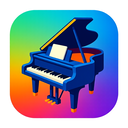
The "Technology, Piano, and Vibrant Colors" icon is a visually striking and conceptually rich digital artwork that masterfully merges the timeless elegance of classical music with the futuristic pulse of modern technology. At its core, this icon represents a powerful synergy between human creativity—embodied by the piano—and the boundless potential of technological advancement. The design does not simply juxtapose these elements; it weaves them together into a harmonious, dynamic composition that reflects both emotional depth and forward-thinking innovation.
The central figure of the icon is a grand piano, rendered with meticulous detail and elevated to an almost architectural prominence. The piano’s shape is not merely static—it appears to float slightly above the canvas, as if suspended in mid-air by invisible currents of data and sound waves. This visual effect immediately introduces a technological dimension: instead of being rooted in physical space, the piano exists in a digital realm where gravity and form are manipulated by code and algorithms. The piano’s surface is not plain wood; it is composed of layered textures that reflect real-world materials—smooth mahogany with subtle grain—but enhanced with glowing edges and translucent overlays that mimic digital interfaces such as holograms or augmented reality projections.
Each key of the piano is uniquely designed to represent a different aspect of technology. For instance, the white keys shimmer in shades of cyan and electric blue, symbolizing data transmission, internet connectivity, and cloud computing. The black keys glow in deep magentas, purples, and neon teals—colors often associated with digital innovation such as artificial intelligence and neural networks. These colors are not randomly chosen; they follow a harmonic progression that mirrors the musical scale of the piano itself. When viewed together, the keys form an invisible melody line that pulses gently in rhythm with a soft ambient sound wave embedded within the icon's structure—creating an experience where sight, sound, and technology merge into one cohesive sensory narrative.
The vibrant colors dominate this icon in a way that is both exhilarating and balanced. The palette is bold and modern, avoiding flat or generic hues. Instead, it uses high-contrast combinations of saturated tones—electric pink overlays on silver keys, neon green highlights along the piano’s frame, and gradients that shift from deep violet to radiant orange across the body of the instrument. This color scheme evokes a sense of energy and excitement, much like a live performance in a well-lit concert hall where every note is amplified by stage lighting. The use of vibrant colors does not dominate or overwhelm; rather, they enhance the emotional tone—inviting viewers to feel both inspired and connected to the music.
Surrounding the piano are abstract technological elements that form a digital aura. These include floating circuit patterns that resemble neural networks, streams of data flowing like liquid light across the air around the instrument, and subtle animations suggesting real-time processing—such as tiny particles moving in response to hypothetical notes being played. These elements are not mere decorations; they function as an interactive metaphor: every time a user "plays" a note (in a digital interface), these streams of data react dynamically, branching out into new patterns that resemble visual representations of algorithmic responses or machine learning predictions.
One particularly striking feature is the integration of sound waves as visible, flowing lines that originate from the piano and expand outward in all directions. These waves are not simple sine curves; they take on digital forms—sharp, angular edges where data is processed, smooth curves where music flows naturally. The color variation within these waves corresponds directly to the pitch of the notes: lower tones appear in deep indigo and dark reds, while higher tones burst into bright golds and whites. This visual representation makes sound tangible—transforming an abstract concept into a dynamic, observable phenomenon.
The background of the icon is minimalist yet powerful. It features a gradient that transitions from deep space navy at the edges to radiant white in the center, mimicking both cosmic vastness and digital clarity. Within this backdrop, subtle geometric shapes—such as hexagons and triangles—appear like data nodes or network points, reinforcing the technological foundation of the piece. These patterns are not chaotic; they follow mathematical symmetry and balance, reflecting how technology often operates based on structured logic and precision.
From a symbolic standpoint, this icon represents a new era of human-computer interaction—one where creativity is no longer confined by traditional boundaries. The piano symbolizes human emotion, intuition, and artistic expression; technology provides the tools to amplify, preserve, and even reinterpret these emotions through digital platforms. Vibrant colors serve as emotional conduits—each hue representing a different feeling or mood that can be triggered by music or technology. In this way, the icon becomes more than a visual symbol—it becomes an experience.
Moreover, the design is optimized for use in modern digital environments such as mobile apps, websites, and interactive dashboards. Its high-contrast colors ensure visibility even on dark backgrounds or low-light screens. The combination of recognizable elements—like the piano—and futuristic details makes it accessible to both tech-savvy users and those who may not be familiar with digital interfaces. It functions as a bridge between emotional resonance and technological functionality.
In essence, the "Technology, Piano, and Vibrant Colors" icon is not just a visual composition—it is an immersive narrative of innovation in art. It celebrates the fusion of human creativity with machine intelligence, using bold color palettes to express emotion and energy. Whether used as a logo for a music-tech startup, an educational platform about digital sound design, or simply as a symbol of artistic progress, this icon stands out as both beautiful and meaningful—an inspiring reminder that technology does not have to replace art; it can elevate it.
With every glance at the icon, viewers are invited to imagine a future where the piano plays not only in concert halls but also in data centers, neural networks, and virtual reality worlds. In that future, vibrant colors will illuminate the notes of progress—each one a step forward in our journey toward a more connected, creative, and technologically empowered world.
Create your own icon with our GoGPT AI prompt:
GoGPT