

Transportation Airplane Organic – Free icon download
Download all to grab every PNG variant.
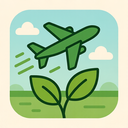
In a world increasingly defined by technological advancement and global connectivity, the fusion of Transportation, Airplane, and Organic elements into a single icon represents not just movement through space but also a deeper commitment to harmony between human progress and natural ecosystems. This unique icon is designed as a visual metaphor for sustainable, conscious travel — where modern transportation solutions like airplanes are reimagined not as symbols of carbon-intensive consumption, but as tools that integrate with the principles of organic living and environmental balance.
At its core, the icon features a stylized airplane silhouette. However, rather than depicting a traditional jet or commercial aircraft with sharp edges and metallic sheen, this version is rendered in soft, flowing lines reminiscent of natural forms — like the curves of a leaf or the gentle undulations of ocean waves. The wings are not rigid but gently arching and symmetrical, echoing organic growth patterns. The fuselage appears to be made from a translucent material that suggests light diffusion — perhaps resembling sunlight filtered through tree canopies or plant-based composites such as bamboo or bioplastics. This visual choice immediately communicates a departure from industrialized, fossil-fuel-based aviation and instead evokes the elegance and adaptability of nature itself.
The presence of Transportation is not merely implied; it is central to the icon’s identity. The airplane is positioned mid-flight, ascending through a gradient sky that transitions from deep blue at the bottom to soft green at the top — a deliberate design choice symbolizing not only movement but also environmental progression. The sky acts as a dynamic backdrop, where subtle ribbons of flora emerge from the clouds — resembling vines or moss creeping across aerial surfaces. This suggests that transportation does not exist in isolation from nature; instead, it is woven into and nurtured by the natural world. The path of the airplane traces a route that mimics natural migration patterns — such as birds flying in V-formations — reinforcing a philosophy of efficiency and harmony rather than speed and isolation.
What sets this icon apart is its deep integration of Organic principles. The entire composition avoids synthetic, artificial aesthetics. Colors are earthy and natural: moss greens, warm terracottas, sky blues, and soft sunmild yellows — all hues found in nature’s palette. There is no sharp contrast or harsh lighting; instead, gradients and soft shadows give the image a living quality. The airplane's surface might be subtly textured to resemble bark or cellular structures of plants — a nod to biomimicry, where human designs are inspired by natural forms to achieve efficiency and sustainability.
Moreover, the icon includes small visual elements that represent ecological balance. For instance, tiny seed pods appear along the fuselage’s sides — not as decorative trinkets but as functional symbols of regeneration. These seeds could represent future plant life that will grow in areas previously disturbed by transportation infrastructure. Similarly, a gentle ripple effect is seen beneath the airplane, symbolizing how movement through air can stimulate natural processes like wind dispersal and pollination. The icon subtly suggests that every journey — even those involving aircraft — has the potential to contribute to ecological restoration when aligned with organic principles.
This fusion of Transportation, Airplane, and Organic is not just aesthetic; it carries profound philosophical weight. It challenges the conventional narrative that modern travel must come at the cost of environmental degradation. Instead, it proposes a new paradigm: transportation can be both efficient and sustainable when designed with nature in mind. The airplane becomes not an instrument of destruction but a vessel for connection — between people, cultures, and ecosystems across the globe.
From a design standpoint, this icon is scalable and universally accessible. It can be used in digital platforms, educational materials, urban planning documents, and eco-conscious branding to communicate sustainable travel options. Its simplicity ensures clarity while its depth invites interpretation — making it valuable for both casual users and experts in environmental science or transportation policy.
Consider the implications of this icon beyond its visual appeal. In a climate-crisis context where emissions from aviation are under scrutiny, this symbol offers a hopeful alternative vision — one where innovation and nature are not rivals but allies. It suggests that by adopting organic design principles — such as using renewable materials, minimizing environmental footprints, and promoting regenerative practices — even high-altitude travel can become part of a sustainable future.
The icon also speaks to cultural values. In many indigenous traditions, flight is associated with spiritual ascension or connection to the divine. By grounding this concept in organic elements — such as plants, wind patterns, and natural cycles — the icon bridges ancient wisdom with modern technology. It suggests that progress need not mean disruption; instead, it can be a form of reverence for the natural world.
Furthermore, this icon could serve as a compass for future transportation development. Architects and engineers might use it as inspiration to design aircraft made from biodegradable composites or powered by renewable energy sources. Urban planners might incorporate such symbols in public spaces to promote green travel choices — such as electric aviation or carbon-neutral flight options.
Ultimately, the icon is not just about flying; it's about redefining what it means to move through the world. It embodies a vision of transportation that honors both human needs and ecological integrity. The airplane, once a symbol of speed and separation, now stands as an emblem of balance — gliding through the sky with grace, guided by the wisdom of nature and powered by sustainable energy.
Therefore, this icon serves as more than a simple visual representation. It is a statement — one that calls for innovation rooted in empathy, design informed by ecology, and progress that respects the planet we share. In merging Transportation, Airplane, and Organic into one cohesive concept, it reimagines our relationship with movement and the natural world — offering a blueprint for a future where travel is not only possible but also responsible, beautiful, and deeply connected to life on Earth.
Create your own icon with our GoGPT AI prompt:
GoGPT