

Transportation Bus Retro – Free icon download
Download all to grab every PNG variant.
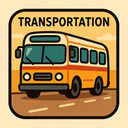
The "Retro Bus Transportation" icon is a vivid, nostalgic representation that seamlessly blends three essential elements: Transportation, Bus, and Retro. Designed not merely as a simple image but as a richly layered symbol of cultural memory and everyday life, this icon captures the essence of the past while still resonating with modern users who value authenticity and charm. At its core, the icon embodies a classic bus from an era when public transit was both functional and deeply embedded in community identity—when cities pulsed with the hum of engines, children rode along side windows filled with sunlight, and every route had a story.
From the very first stroke of design, the icon establishes its primary subject: a bus. However, it does not depict a generic or modern vehicle. Instead, it portrays an older model—often resembling a 1960s or 1970s city bus—with features like wooden-style body panels, round headlights with amber lenses, and exposed chrome trim. The bus is rendered in a stylized yet faithful manner: its roof may have subtle curves and flat panels reminiscent of vintage designs; the windows are rectangular with clean lines and slightly tinted glass effects to evoke a sense of age. The front grille is prominent, featuring bold horizontal bars or grilles that give the impression of mechanical craftsmanship, while the rear ends in a classic square shape with tail lights styled like vintage bulbs—often red and white, arranged in pairs or single elements that glow softly.
Transportation is not just implied—it is central to the icon’s purpose. The entire composition suggests movement. The bus is positioned slightly diagonally, as if it's driving down a winding road or approaching a bustling city street, symbolizing the flow of people and daily commutes. Arrows subtly appear in the background or near the bus’s edges, indicating direction and connectivity. This dynamic element underscores that this icon represents more than just a vehicle; it stands for mobility, access to places, and social interaction. In an age dominated by digital transport apps and autonomous vehicles, this retro icon serves as a grounding force—a reminder of how transportation once operated as human-centered, accessible public service.
Yet what truly sets the "Retro Bus Transportation" icon apart is its Retro aesthetic. This is not simply about color or style—it's a deliberate homage to the design philosophies of mid-20th-century consumer culture. The palette features warm, earthy tones: faded reds, deep blues, mustard yellows, and vintage green accents that reflect the colors commonly seen in buses from decades past. These hues are not overly saturated; they carry a muted nostalgia that makes the icon feel authentic and timeless rather than artificially trendy. The typography used in accompanying labels or captions—such as “Route 15” or “City Line”—is styled with block letters, serif fonts, or even hand-drawn cursive to mimic vintage signage.
The retro influence extends beyond visual design into the emotional resonance of the icon. It evokes a sense of familiarity and comfort. For many users, especially those who grew up in urban environments during the 1960s–1980s, this bus is instantly recognizable—a symbol of childhood memories: waiting at stops with friends, listening to vinyl records playing on the bus radio, or riding through neighborhoods known for their colorful storefronts and tree-lined streets. This emotional layer adds depth to its use in modern interfaces where functionality often takes precedence over sentiment. In digital dashboards, navigation tools, or travel apps, the retro bus can serve as a humanizing element—offering not just information but a sense of warmth and connection.
Furthermore, the icon is adaptable across various contexts. It can be used in urban planning visualizations to represent public transit networks in historical or simulated city models. In educational materials, it helps teach younger generations about the evolution of transportation systems. In branding for sustainable transport initiatives, its retro appeal can contrast with modern green technology—highlighting how traditional vehicles once served communities before being replaced by more efficient alternatives.
From a technical standpoint, the icon is optimized for clarity and scalability. It is designed to be recognizable even at small sizes or when used as a favicon on mobile devices. Its vector format ensures crisp edges and consistent proportions regardless of screen resolution. The balance between detail and simplicity allows it to remain effective without becoming cluttered—each element serves a purpose: the bus body speaks to identity, the retro design speaks to time, and the transportation theme speaks to utility.
What makes this icon truly remarkable is how it successfully merges past and present. It does not romanticize outdated technology but instead honors its role in shaping modern society. The retro bus is a bridge—a physical symbol of how transportation once connected people, places, and cultures in ways that were both practical and deeply human. In an increasingly automated world, where cars may drive themselves and trains run on GPS-guided tracks, the retro bus serves as a poignant reminder of the value in human touch: the shared experience of riding together, seeing new sights along a route, or simply feeling part of a community’s rhythm.
In conclusion, the "Retro Bus Transportation" icon is more than a visual motif. It is an emotional narrative woven into every curve and color. Through its emphasis on transportation as movement and access, its faithful representation of vintage bus design, and its deep connection to nostalgic memory, it stands as a powerful symbol in today’s rapidly evolving digital landscape. Whether used in apps, websites, or public art installations, this icon invites users not only to see but to remember—offering a touch of humanity amid the pace and complexity of modern life.
Create your own icon with our GoGPT AI prompt:
GoGPT