

Transportation Drone Digital glitch – Free icon download
Download all to grab every PNG variant.
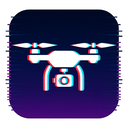
The "Transportation, Drone, Digital Glitch" icon is a visually striking and conceptually rich symbol that merges the future-forward dynamics of modern transportation with the cutting-edge technology of drones and the chaotic beauty of digital glitches. This icon is not merely a static image; it is a dynamic visual narrative embedded with technological ambiguity, emotional tension, and futuristic speculation—elements that resonate deeply in today's rapidly evolving world where physical movement and digital systems are increasingly intertwined.
At its core, the icon represents the theme of Transportation. It evokes motion—swift, fluid, yet unpredictable. The form captures the essence of movement through abstract lines that suggest flight paths, velocity vectors, and continuous progression. These transportation motifs are not limited to traditional vehicles like cars or trains; instead, they are reimagined in a way that reflects a post-automotive future where aerial mobility is paramount. The icon suggests a network of routes extending into the sky, resembling air traffic patterns or urban delivery corridors—hallmarks of modern smart city planning. Each line subtly pulses with energy, mimicking the rhythm of transit systems that operate on real-time data and automated control.
Central to this composition is the figure of the Drone. The drone is not depicted as a realistic, three-dimensional model but rather as an abstracted form—its shape composed of fragmented geometric elements, angular edges, and shifting polygons. It hovers at the center or slightly off-center within the icon's field, embodying both autonomy and vulnerability. The drone’s body appears segmented into digital fragments: pixels that flicker in and out of visibility, its propellers rendered as intersecting lines that vibrate with an almost organic pulse. This representation emphasizes not only the technological nature of drones but also their role as agents of transformation within transportation systems—delivering goods, surveilling cities, or mapping terrain in real time.
However, what truly sets this icon apart is its integration of the Digital Glitch. This element introduces a layer of imperfection and instability that contrasts sharply with the clean lines and precision expected in traditional transportation symbols. The digital glitch manifests through visual anomalies: jagged edges, color bleed, pixelation, sudden flashes of static noise, and corrupted data streams that ripple across the background or distort the drone’s form. These glitches are not accidental; they are intentional design features that reflect real-world challenges in digital systems—network latency, signal interference, software malfunctions—and suggest a world where technology is both powerful and fragile.
The glitch effect does more than create aesthetic disruption—it serves as a narrative device. It symbolizes the inherent instability of relying on digital infrastructure for transportation. When drones operate through GPS-guided navigation or AI-powered routing, they are subject to signal loss, data corruption, or cyber-attacks. The icon thus becomes a metaphor for the tension between progress and vulnerability in smart mobility systems. The digital glitches subtly distort the drone’s trajectory, causing it to waver between intended flight paths—sometimes veering off course, other times appearing to float in suspended animation. This instability mirrors real-world incidents where autonomous drones have failed due to software bugs or environmental interference.
Furthermore, the icon reflects the increasing convergence of physical and digital realms in transportation. The drone is not just flying through space—it is transmitting data back and forth, feeding into a vast digital network that maps traffic patterns, monitors weather conditions, and predicts delivery windows. These data streams are visually represented as flowing lines of corrupted text or fragmented code that merge with the background. In moments of high stress or system overload, these streams burst into chaotic patterns—like a digital storm—creating a sense of urgency and complexity.
Color usage in this icon also plays a crucial role. Dominant tones are cool blues and purples to represent technology and space, but they are interlaced with bursts of neon reds, electric greens, and distorted whites that signify the glitches. These contrasting colors not only enhance visual interest but also reinforce the duality of innovation versus disruption. The color shifts reflect changes in system status—when a drone is operating smoothly, the palette is stable; during a glitch, it becomes erratic and unpredictable.
From a cultural perspective, this icon speaks to contemporary anxieties about automation and digital dependence. As cities develop drone delivery networks or autonomous flying taxis, questions arise about safety, privacy, and control. The digital glitch acts as a visual prompt for these concerns—suggesting that even the most advanced transportation systems are not immune to failure or unintended consequences. It challenges viewers to consider whether progress in technology comes at the cost of reliability and human oversight.
In summary, the "Transportation, Drone, Digital Glitch" icon is a sophisticated fusion of form and meaning. It transcends simple visual representation by weaving together three powerful concepts into a unified artistic statement. It captures the essence of modern mobility through aerial drones while acknowledging the digital vulnerabilities that underpin such systems. By incorporating digital glitches as an essential component rather than a flaw, it celebrates technological advancement while reminding us of its fragility. This icon is not just a symbol—it is a mirror, reflecting our hopes for seamless transportation and our fears about the unpredictable nature of technology in an increasingly connected world.
Whether used in design systems, urban planning proposals, or digital art installations, this icon serves as both an aesthetic beacon and a cautionary tale. It invites viewers to engage with the future—not just with optimism, but with critical awareness. In doing so, it becomes more than an icon; it becomes a cultural touchstone for the evolving relationship between humans, machines, and the digital spaces that mediate our daily lives.
Create your own icon with our GoGPT AI prompt:
GoGPT