

Transportation Road Minimalist – Free icon download
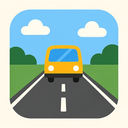
Download all to grab every PNG variant.
At the heart of modern design lies a balance between functionality, clarity, and aesthetic simplicity. Among the vast array of icons used across digital platforms—ranging from navigation apps to urban planning tools—the "Minimalist Transportation Road Icon" stands as a prime example of how essential elements can be distilled into elegant visual form without sacrificing meaning. This specific icon is not merely a representation; it is a carefully crafted fusion of three core design principles: Transportation, Road, and Minimalist. Each component contributes to the overall effectiveness, usability, and emotional resonance of the visual element.
The concept of "Transportation" in this icon is not limited to a single mode—such as cars, buses, or trains—but instead embodies the broader idea of human movement across space. It suggests connectivity, access, and flow between locations. The design does not depict vehicles or people explicitly; instead, it abstracts the essence of transportation by focusing on pathways that enable travel. This abstraction ensures that regardless of cultural context or user familiarity with specific modes of transport, the icon remains universally recognizable as a symbol related to movement and logistics.
Embedded within this idea is the concept of "Road," which serves as both a literal and metaphorical foundation. A road, in its most basic form, is a linear pathway designed for vehicles or pedestrians to traverse from one point to another. In this minimalist icon, the road element appears as a clean, geometric line—often drawn with subtle variation in width or curvature to suggest directionality without visual clutter. The road may be rendered using thin strokes or even just a simple horizontal bar with slight tapering at its ends, evoking the sense of an open path stretching into the distance. This representation is intentionally stripped of details such as lane markings, traffic signs, trees, or curbs—all elements that would add complexity and contradict the minimalist ethos.
The "Minimalist" aspect defines not only how the icon is constructed but also its purpose in a user interface. Minimalism in design prioritizes clarity, focus, and ease of recognition. In this case, every line and shape serves a function: it communicates movement, directionality, and accessibility with precision. There are no unnecessary colors or textures—typically limited to one neutral tone such as gray, white, or black—ensuring the icon blends seamlessly into both light and dark backgrounds. This neutrality allows the icon to be used across diverse applications without causing visual fatigue or distraction.
From a design standpoint, minimalism in transportation icons often relies on symmetry and balance. The road element is frequently centered vertically or horizontally, creating a sense of stability and predictability. This central positioning reinforces the idea that transportation infrastructure forms a consistent backbone for urban planning, logistics networks, and travel solutions. The icon’s simplicity allows it to scale effortlessly across different screen sizes—from mobile app icons to large dashboards—without losing legibility or impact.
The use of negative space in this design is another hallmark of minimalism. Instead of filling the canvas with lines or shapes, the icon often leaves significant empty areas around its core form. This intentional emptiness emphasizes the open-ended nature of transportation: a path that leads forward, not a fixed destination. It reflects how roads are meant to connect places rather than define them, and it subtly conveys the dynamic potential of movement—whether for personal travel, delivery services, or public transit.
Moreover, this icon functions efficiently in real-world applications. In navigation apps, it can serve as a visual cue for road networks or route planning. In urban development platforms, it may represent infrastructure corridors or future transportation routes. Even in environmental assessments or sustainability reports, the minimalist road icon can symbolize efficient movement systems that minimize carbon emissions when paired with green transport alternatives.
Psychologically, such an icon carries a calm and reassuring presence. The absence of noise—no cluttered details, no chaotic elements—creates a sense of order and control. Users are more likely to trust and engage with interfaces that feature clean, unobtrusive symbols. This makes the minimalist transportation road icon especially effective in high-stress environments such as emergency response apps or traffic management tools where quick recognition is essential.
Designers often face the challenge of representing complex ideas with simplicity. The success of this icon lies in its ability to convey a multifaceted concept—transportation, road networks, and movement—with just a few clean strokes. It does not attempt to teach; it simply signals. In that way, it aligns with modern design principles such as “less is more” and user-centered accessibility.
From an artistic perspective, the minimalist transportation road icon belongs to a growing trend of abstract icons that prioritize meaning over ornamentation. This approach resonates with contemporary digital culture—where users expect fast, intuitive interactions and visual clarity. Whether placed in a mobile interface, a government service portal, or a smart city dashboard, this icon remains instantly interpretable due to its universal symbolism.
In conclusion, the Minimalist Transportation Road Icon is more than just a design choice—it is a thoughtful synthesis of function and form. It embodies the principles of transportation by representing movement without specifics; it expresses the idea of road through clean, directional lines; and it achieves minimalist elegance through deliberate reduction of visual elements. This icon serves as both a practical tool and an aesthetic statement, demonstrating how simplicity can enhance understanding, promote usability, and foster trust in digital environments.
Its enduring value lies in its adaptability—capable of being used across industries, cultures, and technologies—all while maintaining consistent clarity. As cities grow more complex and digital interactions become more frequent, icons like this one will remain essential components of intuitive user experiences. In a world increasingly defined by connectivity and mobility, the minimalist transportation road icon stands as a quiet yet powerful symbol of progress.
Create your own icon with our GoGPT AI prompt:
GoGPT