

Transportation Road Organic – Free icon download
Download all to grab every PNG variant.
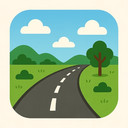
The "Transportation, Road, and Organic" icon is a unique visual representation that seamlessly fuses three seemingly distinct yet deeply interconnected concepts: transportation systems, road networks, and organic principles. Designed not merely as an aesthetic symbol but as a meaningful fusion of functionality and sustainability, this icon serves as both a navigational tool and a philosophical statement about how we move through the world—and how that movement should align with natural rhythms and environmental integrity.
At its core, the icon features a dynamic, flowing road network rendered in soft earth tones—muted greens, warm browns, and light ochres—that evoke the organic growth patterns found in nature. Instead of rigid lines or geometric precision typical of traditional road maps or urban planning diagrams, the roads curve organically like riverbeds or tree roots. Each lane appears to grow from a central hub in a branching, dendritic pattern that mimics the way ecosystems expand and interconnect over time. This organic structure reflects not only natural processes but also the idea that transportation should be flexible, adaptive, and responsive to changing environments—rather than static and engineered for maximum efficiency at the cost of ecological balance.
The "Transportation" aspect of this icon is embodied through a variety of movement elements integrated into the design. Small, stylized vehicles—such as bicycles, electric scooters, walking paths, and shared mobility units—are subtly embedded within the road network. These aren't just decorative; they represent a shift toward human-centered and sustainable modes of transport. Unlike conventional icons that emphasize cars or highways, this icon centers on low-impact travel methods that prioritize health, accessibility, and environmental harmony. The vehicles are rendered in minimalist forms with soft edges, resembling living organisms rather than mechanical objects—further emphasizing the organic theme.
The "Road" element is not a mere backdrop but a vital component of the icon's narrative. The roads aren’t straight lines or highways—they are meandering pathways that rise and fall like terrain features, echoing natural landscapes. Each road segment connects to others in a way that creates both continuity and diversity, suggesting an interconnected web of movement across different communities, ecosystems, and scales. The intersections between roads appear as nodal points where greenery bursts through—trees, wildflowers, or even small patches of farmland—demonstrating how transportation infrastructure can coexist with natural environments rather than dominate them.
Crucially, the "Organic" dimension of this icon goes beyond aesthetics. It represents a holistic philosophy about sustainability and interdependence. The design incorporates elements such as seasonal foliage, flowing water patterns beneath roads (symbolizing drainage and groundwater), and even tiny representations of pollinators like bees or butterflies that move along the edges of pathways. These details suggest that transportation networks are not isolated systems but part of a larger ecological cycle—one where movement supports biodiversity, reduces pollution, and promotes resilience.
From a functional perspective, this icon functions as both an educational tool and a visual guide. It can be used in urban planning documents to illustrate how cities can integrate sustainable transport with green spaces. For example, planners might use the icon to show how new bike lanes or pedestrian zones could follow the natural contours of topography—reducing erosion and enhancing community access without disrupting native flora and fauna.
The icon also speaks to a growing global movement toward regenerative transportation. In cities around the world, there is increasing pressure to move away from fossil-fuel-based systems and toward solutions that are not only environmentally friendly but also socially inclusive. This icon embodies that vision: it shows how roads can be reimagined as living, breathing systems—where every vehicle is a contributor to a balanced ecosystem rather than a polluter.
Moreover, the organic design of the roads encourages adaptability and resilience. In times of climate change or natural disasters, such flexible networks are more likely to survive disruptions because they can reconfigure themselves based on environmental cues—like rainfall or temperature shifts. This is in contrast to rigid infrastructure that fails under stress or requires costly repairs.
Color plays a critical role in the icon's effectiveness. The use of natural pigments—greens for vegetation, browns for earth, and soft blues for water—creates a calming visual effect that appeals to emotional and psychological well-being. Studies have shown that exposure to nature-inspired colors can reduce stress, improve cognitive function, and increase feelings of connection to place. Thus, the icon doesn’t just represent movement—it fosters a sense of peace and belonging within the context of daily travel.
Additionally, the icon’s scalability makes it versatile across platforms—from mobile apps that promote eco-friendly commuting to public signage in sustainable neighborhoods. Whether displayed on a smartphone screen or printed on a community bulletin, its design remains legible and meaningful regardless of size.
In essence, the "Transportation, Road, and Organic" icon is more than just a symbol—it is an invitation to rethink how we interact with our environment. It challenges us to envision transportation not as something that conquers nature but as something that grows alongside it. By merging the practicality of road systems with the vitality of organic life, this icon becomes a powerful metaphor for sustainable development—a future where mobility enhances, rather than degrades, the health of our planet.
This integration of Transportation, Road, and Organic principles makes the icon not only visually compelling but deeply relevant to contemporary environmental and urban challenges. It serves as a beacon for communities striving to build resilient, equitable, and ecologically sound transportation systems for generations to come.
Create your own icon with our GoGPT AI prompt:
GoGPT