

Transportation Smartphone Retro – Free icon download
Download all to grab every PNG variant.
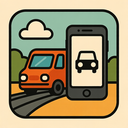
This iconic design is a vibrant, hand-crafted representation that seamlessly merges the timeless charm of retro aesthetics with the modern functionality of transportation and digital connectivity through a smartphone. At its core lies a dynamic fusion where the nostalgia of vintage technology meets today’s world of smart mobility, creating an emblem that speaks to both past and future.
The central element of this icon is a retro-styled automobile — not just any car, but one inspired by classic 1960s American design. Its curves are smooth and exaggerated, echoing the sleek lines of muscle cars from the golden age of motoring. The body is painted in a bold gradient of teal and mustard yellow, reminiscent of vintage diner signage or retro TV sets — colors that instantly evoke nostalgia and a sense of playful optimism. The car features a stylized chrome grille with circular headlights that resemble old analog dashboards, complete with flickering neon-style indicators. These details are not mere decorative flourishes; they represent the emotional resonance of classic transportation — reliability, speed, freedom — all captured in a retro lens.
Surrounding the car is a glowing smartphone floating slightly above it in a suspended animation effect. This smartphone is styled with unmistakably retro design elements: its screen has a pixelated interface reminiscent of 1980s game consoles, with blocky, high-contrast pixels forming an iconography that blends seamlessly into the background. The device itself is designed like a vintage Motorola or Nokia phone — rounded edges, minimal buttons, and a bright blue screen that pulses gently with soft light. On the screen’s surface, instead of modern apps or messages, a series of animated icons are displayed: one showing a train track looping around the car, another depicting an airplane flying over mountain ranges with retro-style airwaves. These visual cues symbolize the broad scope of transportation — from ground to sky to sea — all accessible through smart technology.
The smartphone is not just a passive observer; it is an active participant in the icon’s narrative. It acts as a bridge between the user and the world of transportation, illustrating how modern smartphones now serve as navigation tools, travel planners, and real-time connectivity devices. The device's placement above the car emphasizes interactivity — users can “tap” or “scan” it to access route suggestions, traffic updates, or even historical travel data. This interaction is visually represented by subtle animation: when the user "interacts" with the icon (as if in a digital interface), the smartphone screen briefly flickers and reveals a map of classic routes — such as Route 66 or The Trans-Siberian Railway — each marked with vintage route signs and hand-drawn illustrations.
The overall color palette is carefully curated to reflect retro inspiration while remaining vibrant and modern. Dominant colors include faded teal, warm orange, deep navy blue, and white — tones that echo the aesthetics of mid-century design magazines or 1970s advertising posters. These colors are layered with subtle gradients and soft shadows to give depth without sacrificing clarity. The icon is rendered in a slightly hand-drawn style, with gentle strokes and rounded corners that mimic illustrations from vintage comic books or retro video games — a deliberate choice to emphasize the nostalgic feel.
From a cultural perspective, this icon encapsulates how transportation has evolved from mechanical systems to smart, connected experiences. In the 1950s and 60s, people relied on physical maps, gas stations with neon signs, and personal vehicles that required manual maintenance. Today’s smartphones have transformed these experiences — offering GPS navigation, live updates on traffic conditions, electric vehicle charging stations via apps — all accessible from a device that looks like it could belong in a retro arcade or 1980s science fiction film.
Moreover, the "Retro" aspect of this icon is not merely decorative. It represents a conscious effort to reconnect with the human-centered values of early transportation: community, exploration, and personal journeys. In an age where digital convenience often replaces physical engagement, this design serves as a reminder that travel remains fundamentally about experience — whether it's driving through rural backroads or taking a vintage train ride across Europe. The retro style evokes emotion — joy, wonder, simplicity — making the icon not just functional but emotionally resonant.
Technologically, the icon is designed to be scalable and interactive for digital platforms. It can appear in mobile apps related to travel planning, car culture communities, or retro-themed lifestyle platforms. In an app interface, users might swipe through a timeline of transportation innovations — from horse-drawn carriages to self-driving cars — with each phase illustrated using this retro-smartphone fusion design. This creates an engaging educational experience that blends nostalgia with modern functionality.
Finally, the integration of “Smartphone” within a “Retro” framework ensures accessibility and inclusivity. It shows that even in a world dominated by advanced technology, people still appreciate the beauty and simplicity of simpler times. The smartphone here is not just a tool — it's a symbol of progress that respects its roots. Similarly, transportation remains central to human life, linking communities and cultures across vast distances — an idea reinforced by the car’s central position in the icon.
In essence, this icon is more than just a visual motif. It is a narrative about evolution — how technology has not replaced tradition but evolved alongside it. The fusion of Transportation, Smartphone, and Retro elements creates a powerful symbol that resonates across generations. It invites users to reflect on how we once traveled through the world and now navigate it through smart devices — all while maintaining a deep appreciation for the charm of bygone eras.
Whether displayed in a travel app, digital brochure, or as part of a brand identity for retro-inspired mobility services, this icon stands as a timeless testament to innovation rooted in nostalgia. It is not just about what we use today — it’s about who we are, where we come from, and how our journey continues forward with both progress and memory.
Create your own icon with our GoGPT AI prompt:
GoGPT