

Transportation Train Modern – Free icon download
Download all to grab every PNG variant.
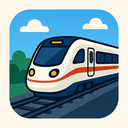
The "Modern Train Transportation" icon is a meticulously crafted visual representation that seamlessly integrates three essential themes: Transportation, Train, and Modern. Designed not only for aesthetic appeal but also for functional clarity, this icon serves as a dynamic symbol in digital interfaces—such as navigation apps, urban planning platforms, transportation hubs, and smart city dashboards—where users need to quickly recognize and understand mobility solutions. The icon transcends simple illustration; it embodies the evolving landscape of sustainable urban infrastructure and intelligent transit systems of the 21st century.
At its core, the icon speaks to the fundamental human need for efficient, safe, and accessible movement. "Transportation" is not just a background element in this design—it is the foundational principle that governs every stroke and dimension of the icon. It reflects how modern society relies on seamless mobility to connect homes, workplaces, educational institutions, and public services. This icon does not represent transportation as a generic concept; instead, it offers an intuitive visual language that communicates speed, reliability, and connectivity. Whether in a mobile app interface or a city map overlay, the icon instantly signals that users are engaging with a system designed for the efficient flow of people and goods.
Modern transportation systems are increasingly focused on sustainability, accessibility, and integration across multiple modes of travel. The "Modern Train Transportation" icon embodies this philosophy by suggesting not only movement but also environmental responsibility—using clean energy sources like electricity or renewable power to reduce carbon emissions. It highlights the shift from fossil-fuel-dependent vehicles to high-capacity rail networks that serve dense urban environments and suburban corridors with minimal ecological impact. By emphasizing these values, the icon aligns with global efforts toward climate action and smart urban development.
The train is not just a feature in this icon—it is its soul. The design centers around an abstract yet recognizable depiction of a high-speed or commuter train, rendered with precision and clarity. Unlike traditional, outdated representations that may show old steam locomotives or cluttered rail lines, this version reflects the cutting-edge nature of contemporary rail technology. The train is portrayed as sleek, streamlined, and aerodynamic—features that reflect advancements in materials science, engineering design, and energy efficiency.
The body of the train is composed using smooth geometric lines and sharp angles to convey a sense of motion and speed. It features transparent or gradient-colored panels that suggest high-tech interiors with digital displays, automated systems, and passenger amenities like real-time seat mapping or Wi-Fi access. The wheels are subtly stylized to represent magnetic levitation (maglev) technology or advanced wheel designs that minimize friction and noise pollution—key innovations in modern rail engineering.
Crucially, the train is not isolated. It is part of a larger transportation ecosystem, connected through a network of clean lines that radiate outward like spokes from a central hub. These lines represent intercity routes, commuter paths, and regional connections—an essential element of modern transportation planning. The icon shows how trains integrate with other modes such as buses, bicycles, and ride-sharing services through color-coded nodes or overlapping pathways that suggest interoperability.
The "Modern" aspect is not merely a stylistic choice—it is deeply embedded in the structure, composition, and user experience of this icon. Modern design emphasizes minimalism, functionality, clarity, and emotional resonance. In this icon, every element has a purpose: lines are clean and intentional; colors are chosen for contrast and psychological impact; shapes reflect movement rather than static forms.
The color palette features cool tones such as deep blues, silvers, and gradients of electric green—colors associated with technology, innovation, and calm efficiency. These hues evoke a sense of trust and forward-thinking progress. The use of transparency in certain sections allows for layered depth without visual clutter, enhancing readability on various screen sizes—from smartphones to large digital dashboards.
Typography or labeling (if included) is minimalist and sans-serif, with bold yet legible fonts that emphasize key information such as "Speed," "On-Time," or "Eco-Friendly." This reinforces the modern user interface standards where clarity and speed of information delivery are paramount. The icon may also incorporate subtle animations—such as a gentle pulse or wave motion—to suggest movement and real-time activity, further enhancing its dynamic nature in digital environments.
Modern design philosophy also values inclusivity. The icon avoids gendered, culturally biased imagery and instead uses universally recognized symbols that can be understood across languages and regions. This ensures global accessibility and scalability—ideal for use in international transit networks or multilingual apps.
This icon finds widespread application in a variety of digital platforms: smart city portals, public transit applications, environmental sustainability reports, urban planning tools, and even educational content about emerging transportation technologies. In cities striving to reduce traffic congestion and improve air quality, the icon serves as a powerful visual cue for promoting rail-based alternatives to private vehicles.
Furthermore, it plays a vital role in shaping public perception. By presenting transportation in a modern, clean, and efficient light, the icon helps build trust between citizens and transportation authorities. It signals progress—showing that cities are investing in sustainable infrastructure that benefits both people and the planet.
As urban populations continue to grow and climate challenges intensify, the "Modern Train Transportation" icon stands as a symbol of hope—a visual promise of smarter, greener, faster travel. It is not just an aesthetic object; it is a message: that transportation can evolve into something more humane, sustainable, and technologically advanced.
Conclusion
In sum, the "Modern Train Transportation" icon masterfully balances the practicality of Transportation with the technological sophistication of Trains and the visual clarity of Modern design. It is a symbol that transcends time and geography, offering a universal language for understanding how cities are evolving to meet today’s complex needs. Whether viewed in a smartphone app or displayed on a public information board, this icon serves as both an identifier and an inspiration—an invitation to embrace the future of mobility with confidence, efficiency, and environmental responsibility.
Create your own icon with our GoGPT AI prompt:
GoGPT