

Travel Train Cyberpunk – Free icon download
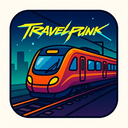
Download all to grab every PNG variant.
In the neon-drenched, high-tech dystopia of the cyberpunk genre, movement is not merely a function of physical transit—it is a narrative force. The icon representing Travel, Train, and Cyberpunk transcends simple illustration; it embodies the essence of futuristic journeys through fragmented urban landscapes, where steel arteries pulse beneath glowing streets and data flows like rivers through the city’s veins. This icon is not just a visual motif—it is a statement on connectivity, escape, and the human desire to traverse both physical and digital realms in a world defined by surveillance, artificial intelligence, and perpetual motion.
At its core, this icon merges Travel with the relentless rhythm of urban life. In cyberpunk settings—where megacities loom over ruined natural environments—the journey is never straightforward. It is layered with risk, mystery, and transformation. The icon captures this complexity through dynamic composition: a figure in a sleek, augmented suit strides forward along a suspended platform above a rain-slicked metropolis. The movement of the figure isn’t just spatial—it suggests an internal journey as well. Their eyes glow faintly with biometric data streams, indicating real-time navigation through encrypted city networks. Every step they take triggers subtle digital pulses in the background—a shimmering trail of holographic waypoints that fade and reform like neural pathways.
The Train element is not just a vehicle; it is an icon of transformation and rebellion. The train in this icon does not resemble traditional steam or diesel locomotives. Instead, it is a towering, self-sustaining transport pod—glowing with pulsating blue and crimson energy—its tracks embedded into the city’s infrastructure like veins. These tracks are not fixed to the ground; they float slightly above an artificial gravity field, suspended by quantum magnetic fields that shimmer like liquid neon. The train itself appears segmented, resembling a modular cybernetic organism: each car is customizable, equipped with foldable compartments for passengers or data storage units. Some cars are open-air decks where people ride without seats—floating freely between stations in silence, watching the skyline blur into pixelated rain patterns.
The cyberpunk aesthetic is not just an artistic choice—it is a reflection of a world where technology has consumed society, and travel becomes both a privilege and a form of resistance. The icon reflects this duality: while the train moves with precise efficiency, its journey is monitored by omnipresent surveillance drones that hover in formation above the tracks. These drones are not threatening—they are silent, sleek machines with reflective surfaces that refract light into shifting patterns of code and symbols. In the background, a network of data conduits pulses beneath the city’s surface, feeding energy to the train while simultaneously broadcasting live feeds of every passenger’s biometrics into a central AI system known as "OmniRoute." This system predicts behavior patterns, routes passengers optimally, and even adjusts schedules based on emotional volatility detected via neural implants.
The visual design of the icon emphasizes cyberpunk’s signature contrasts: cold neon colors (electric blue, deep magenta, electric green) against shadowy black backgrounds; mechanical precision fused with organic fluidity; a sense of motion that feels both futuristic and deeply human. The train glides through an urban canyon where skyscrapers are wrapped in holographic advertisements—some promoting data services, others offering illicit pleasure zones or illegal augmentation clinics. As the train passes, these ads flicker in and out of view like digital ghosts, emphasizing the transient nature of information in a world where truth is fluid.
Travel in this context is not passive—it demands engagement. The icon depicts a traveler stepping onto the train platform with their augmented glasses activated. These glasses display real-time route maps that shift dynamically based on traffic patterns, weather data from quantum sensors, and even social sentiment analysis derived from city-wide AI monitoring. The traveler’s hands hover over a neural interface embedded in their wristband—sending encrypted messages to friends or accessing personal travel logs stored in the cloud. Each interaction is seamless, almost invisible, reflecting cyberpunk’s obsession with seamless integration between human and machine.
Moreover, this icon suggests that Travel is not only physical but metaphysical. The journey through the train may lead to a data hub where passengers can download memories or experience alternate realities—what some call "digital tourism." These experiences are simulated using neural emulation technology, allowing travelers to relive moments from their pasts or explore parallel worlds built from fragmented AI-generated narratives. In this sense, the train becomes a portal—not just between cities, but between identities.
From an artistic standpoint, the icon is rich in detail and symbolism. The tracks are not flat—they form intricate fractal patterns that resemble digital circuitry, suggesting that movement is governed by code rather than physics. The train doors open with a soft chime of synthetic glass breaking into harmonic frequencies, echoing through the city like a signal across time zones. Even the air around the train carries a subtle electric current, visible as faint trails of ionized light that dissipate in slow motion.
In conclusion, this Travel, Train, and Cyberpunk icon is more than a visual representation—it is a cultural artifact. It encapsulates the tension between freedom and control, individuality and surveillance, motion and data. It speaks to the future of human movement in a world where technology defines not just how we get from point A to point B, but who we become along the way. The train is no longer a vehicle—it is a symbol of autonomy in an over-monitored society. And travel, once a simple act of displacement, has evolved into an intricate dance between the human spirit and digital consciousness. In this icon, every line reflects hope—of escape, of discovery, and of rebirth beneath the neon skyline.
Create your own icon with our GoGPT AI prompt:
GoGPT